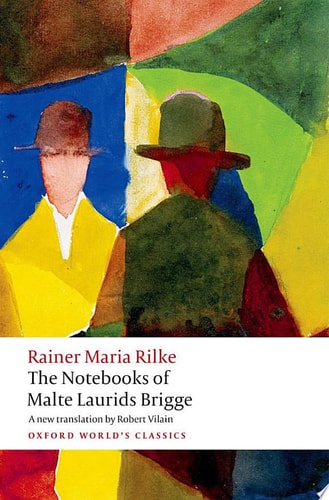
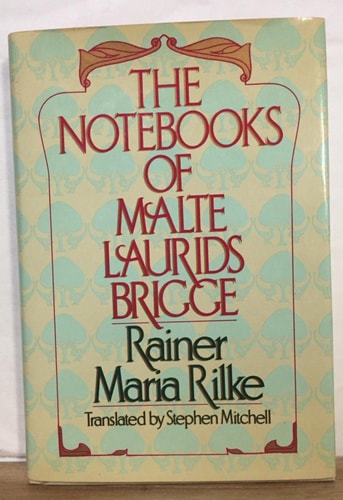
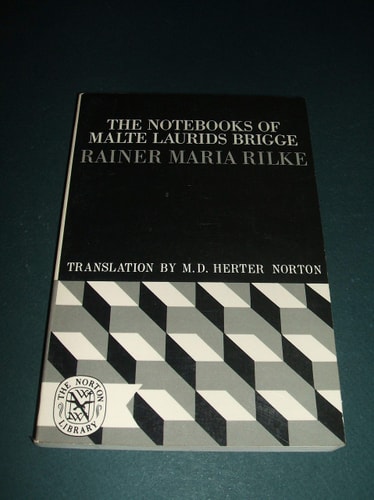
The Notebooks of Malte Laurids Brigge
0
0
As an Amazon Associate and affiliate partner, Menrva Books earns from qualifying purchases. Learn more
Author Description
'an Indescribable, Aching, Futile Longing For Myself' The Young Danish Aristocrat Malte Laurids Brigge Has Been Left Rootless By The Early Death Of His Parents. Now Living In Paris, Malte Begins To Record His Life In A Series Of Loosely Connected Notes, Diary Entries, Prose Poems, Parables And Stories, Ostensibly Collected By A Fictional Editor To Form The Notebooks. Focusing On Malte's Observations And Experiences In The Present, Recollections Of His Childhood And Family, And His Reflections On Historical Events, These Notes In Highly Crafted Poetic Prose Explore The Themes Of Life In The Metropolis, Poverty, Sickness And Death, Love, Memory And Time, And Perception And Language. The Only Extended Prose Work By The German Poet Rainer Maria Rilke, The Notebooks Of Malte Laurids Brigge Is A Landmark In The Development Of The Twentieth-century Novel. It Marks A Radical Departure From Nineteenth-century Realism, Transcending Conventions Of Linear Narrative To Reflect A Consciousness In Crisis, And An Archetypal Confrontation With The Modern.
Menrva's Summary
THE PULSE
A young Danish aristocrat living in Paris attempts to reconcile his fragmented identity through a series of introspective observations and memories. Malte Laurids Brigge navigates the sensory overload and isolation of a modern metropolis while grappling with the trauma of his past. His objective is to capture the essence of his existence through a non-linear collection of diary entries, prose poems, and parables. The narrative framework functions as a stream-of-consciousness exploration, where the physical reality of urban poverty and sickness clashes with the protagonist's internal search for meaning. He faces the logical constraints of a world that seems to be dissolving, forcing him to confront the limits of language and perception.
INSIDE THE PAGES
- Non-linear, episodic narrative structure
- Stream-of-consciousness prose style
- Integration of diary entries and prose poems
- Exploration of urban alienation in Paris
- Philosophical reflections on death and memory
- Autobiographical elements woven into fiction
- Focus on the subjectivity of perception
- Critique of nineteenth-century realism
THE COLLECTIVE ECHO
Readers and critics frequently identify this work as a foundational text of modernist literature due to its departure from traditional narrative conventions. Discussion often centers on the intense, poetic quality of the prose and the protagonist's profound sense of existential crisis. Many highlight the effectiveness of the atmospheric descriptions of Paris, which serve as a mirror for Malte's internal disintegration. The text is often analyzed for its influence on twentieth-century existential thought and its unique approach to the psychological novel. Readers generally find the lack of a conventional plot challenging yet rewarding, as it forces a deeper engagement with the themes of identity and mortality.
Page Count:
272
Publication Date:
2016-01-01
Publisher:
Oxford University Press
ISBN-10:
0191646199
ISBN-13:
9780191646195
German
Autobiographical fiction
Existentialism
Philosophical
Modernist
Community Tags
Other Editions(7)

Similar Books




Reader Comments
Share Your Thoughts
No comments yet. Be the first to share your thoughts!