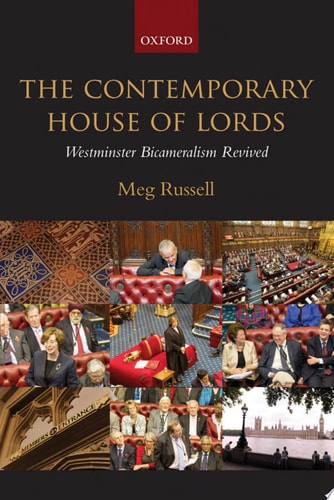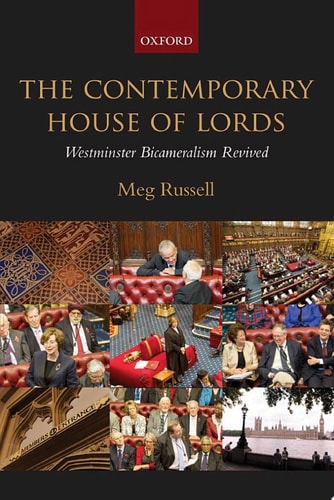
The Contemporary House of Lords: Westminster Bicameralism Revived
0
0
As an Amazon Associate and affiliate partner, Menrva Books earns from qualifying purchases. Learn more
Author Description
As the second chamber of the Westminster parliament, the House of Lords has a central position in British politics. But it is far less well-studied and well understood than the House of Commons. This is in part because of constant expectations that it is about to be reformed - but most Lords reform plans fail, as the Coalition government's dramatically did in 2012. Meanwhile, following a landmark change in 1999 which removed most of its hereditary members, the Lords' role in the policy process has grown. Understanding the chamber is therefore now essential to understanding politics and parliament in Britain. This book provides the first detailed portrait of the post-1999 Lords, explaining who sits in the chamber, how it operates, and crucially what policy impact it has. Its membership is shown to be more diverse and modern than many would assume, and its influence on policy to be substantial. As a 'no overall control' chamber, in which no party has a majority, it has inflicted numerous defeats on the Blair, Brown and Cameron governments, and become an important site of negotiation. It has provided a power base for the Liberal Democrats, and includes a group of almost 200 independents who now play a pivotal role. Close study of today's House of Lords demolishes some common myths about British politics, and also about how two chamber parliaments work. This book, as well as focusing on the contemporary Lords, provides a historical and comparative context for British bicameralism, asks whether the Lords can be considered 'legitimate', and describes recent reform efforts and possible future reforms.
Menrva's Summary
THE THESIS
This book investigates the operational reality and political influence of the House of Lords in the post-1999 era of British parliamentary politics. Meg Russell, a professor of British and Comparative Politics, utilizes extensive empirical data and legislative analysis to challenge the perception that the House of Lords is a stagnant or irrelevant institution. The author argues that the chamber has evolved into a sophisticated site of negotiation and policy influence, particularly in the absence of a single-party majority.
THE SCOPE MAP
What You Will Find
- Analysis of the post-1999 membership composition and diversity.
- Examination of legislative impact and government defeats under the Blair, Brown, and Cameron administrations.
- Comparative framework for understanding bicameralism in the Westminster system.
- Assessment of the chamber's legitimacy and historical reform efforts.
Scope Limits
- Does not provide a comprehensive biography of individual peers.
- Does not offer a predictive model for future constitutional reform outcomes.
THE AUTHORITY PERSPECTIVE
Experts and political scientists recognize this work as a foundational text for understanding the modern British parliamentary system. Readers frequently note the academic rigor and the clarity with which the author dismantles common misconceptions regarding the House of Lords.
Page Count:
348
Publication Date:
2013-01-01
Publisher:
OUP Oxford
ISBN-10:
0191654736
ISBN-13:
9780191654732
History
Politics
Parliamentary Studies
Great Britain
British Government
Professional Career & Trade