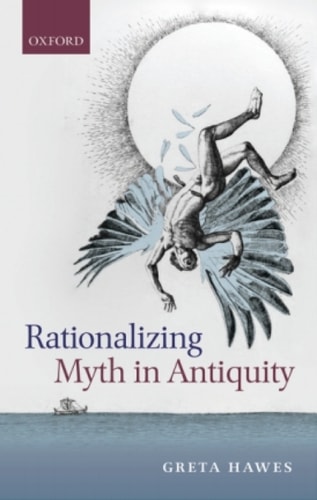
Rationalizing Myth in Antiquity
0
0
As an Amazon Associate and affiliate partner, Menrva Books earns from qualifying purchases. Learn more
Author Description
The Greek myths are characteristically fabulous; they are full of monsters, metamorphoses, and the supernatural. However, they could be told in other ways as well. This volume charts ancient dissatisfaction with the excesses of myth, and the various attempts to cut these stories down to size by explaining them as misunderstood accounts of actual events. In the hands of ancient rationalizers, the hybrid forms of the Centaurs become early horse-riders, seen from a distance; the Minotaur the result of an illicit liaison, not an inter-species love affair; and Cerberus, nothing more than a notorious snake with a lethal bite. Such approaches form an indigenous mode of ancient myth criticism, and show Greeks grappling with the value and utility of their own narrative traditions. Rationalizing interpretations offer an insight into the practical difficulties inherent in distinguishing myth from history in ancient Greece, and indeed the fragmented nature of myth itself as a conceptual entity. By focusing on six Greek authors (Palaephatus, Heraclitus, Excerpta Vaticana, Conon, Plutarch, and Pausanias) and tracing the development of rationalistic interpretation from the fourth century BC to the Second Sophistic (first to second centuries AD) and beyond, Rationalizing Myth in Antiquity shows that, far from being marginalized as it has been in the past, rationalization should be understood as a fundamental component of the pluralistic and shifting network of Greek myth as it was experienced in antiquity.
Menrva's Summary
THE THESIS
This volume investigates how ancient Greek authors attempted to reconcile the supernatural elements of their mythological traditions with historical reality through the process of rationalization. Greta Hawes, a scholar of classical literature and history, examines how these writers stripped away the fantastic to interpret myths as distorted accounts of actual events. By analyzing the works of six specific authors, the book argues that rationalization was not a fringe activity but a central, ongoing method for Greeks to navigate the tension between their narrative heritage and their evolving understanding of history.
THE SCOPE MAP
What You Will Find
- Analysis of six primary authors: Palaephatus, Heraclitus, Excerpta Vaticana, Conon, Plutarch, and Pausanias.
- A chronological study spanning from the fourth century BC to the Second Sophistic period.
- Examination of specific rationalization techniques applied to figures like Centaurs, the Minotaur, and Cerberus.
Scope Limits
- The study does not provide an exhaustive catalog of every instance of rationalization in antiquity.
- It does not focus on modern psychological or structuralist interpretations of myth.
THE AUTHORITY PERSPECTIVE
Scholars recognize this work as a significant contribution to the study of ancient myth criticism and the history of ideas. Readers frequently note the academic rigor and the clarity with which the author navigates the complex, fragmented nature of ancient source material.
Page Count:
304
Publication Date:
2014-01-01
Publisher:
OUP Oxford
ISBN-10:
0191653403
ISBN-13:
9780191653407
History
Criticism history
Plutarch
Ancient Greece
Literary Criticism
Mythology
Ancient History
Community Tags
Similar Books