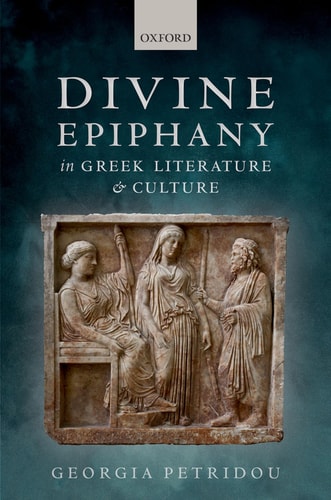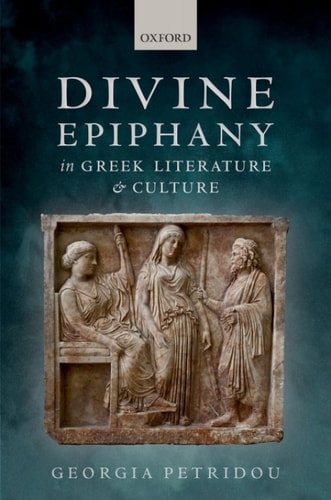
Divine Epiphany in Greek Literature and Culture
0
0
As an Amazon Associate and affiliate partner, Menrva Books earns from qualifying purchases. Learn more
Author Description
In ancient Greece, epiphanies were embedded in cultural production, and employed by the socio-political elite in both perpetuating pre-existing power-structures and constructing new ones. This volume is the first comprehensive survey of the history of divine epiphany as presented in the literary and epigraphic narratives of the Greek-speaking world. It demonstrates that divine epiphanies not only reveal what the Greeks thought about their gods; they tell us just as much about the preoccupations, the preconceptions, and the assumptions of ancient Greek religion and culture. In doing so, it explores the deities who were prone to epiphany and the contexts in which they manifested themselves, as well as the functions (narratives and situational) they served, addressing the cultural specificity of divine morphology and mortal-immortal interaction. Divine Epiphany in Greek Literature and Culture re-establishes epiphany as a crucial mode in Greek religious thought and practice, underlines its centrality in Greek cultural production, and foregrounds its impact on both the political and the societal organization of the ancient Greeks.
Menrva's Summary
THE THESIS
This volume investigates how the concept of divine epiphany functioned as a mechanism for social and political power within the ancient Greek world. Georgia Petridou, a scholar specializing in ancient religion and literature, synthesizes a wide array of literary and epigraphic evidence to argue that accounts of divine manifestation were not merely theological expressions, but active tools used by the elite to reinforce or reshape societal structures. By examining the specific contexts and morphologies of these encounters, the author demonstrates that epiphany served as a fundamental framework for understanding mortal-immortal interaction and religious identity.
THE SCOPE MAP
What You Will Find
- A comprehensive historical survey of divine epiphany across Greek-speaking literature and inscriptions.
- Analysis of the specific deities most frequently associated with epiphanic narratives.
- Examination of the socio-political functions of religious manifestations in ancient Greek culture.
Scope Limits
- The study focuses primarily on the Greek-speaking world and does not extend to comparative analysis of non-Greek religious traditions.
- The text prioritizes literary and epigraphic evidence over archaeological or material culture findings.
THE AUTHORITY PERSPECTIVE
Experts recognize this work as a foundational survey that successfully re-establishes epiphany as a central component of Greek religious thought. Scholars frequently note the academic density of the prose, which makes it a primary resource for researchers in classical studies and ancient history.
Page Count:
472
Publication Date:
2016-01-01
Publisher:
OUP Oxford
ISBN-10:
0191035858
ISBN-13:
9780191035852
History
Religion
Mythology
Ancient Greece
Criticism history
Ancient History