
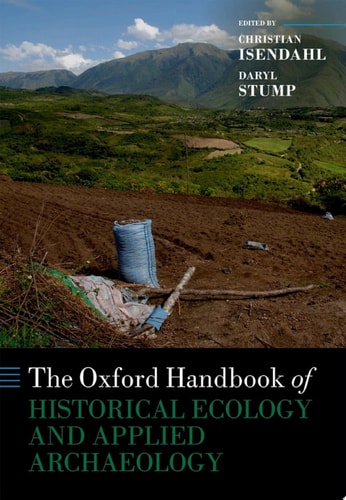
The Oxford Handbook of Historical Ecology and Applied Archaeology
0
0
As an Amazon Associate and affiliate partner, Menrva Books earns from qualifying purchases. Learn more
Author Description
The Oxford Handbook Of Historical Ecology And Applied Archaeology Presents Theoretical Discussions, Methodological Outlines, And Case-studies Describing The Field Of Overlap Between Historical Ecology And The Emerging Sub-discipline Of Applied Archaeology To Highlight How Modern Environments And Landscapes Have Been Shaped By Humans. Historical Ecology Is Based On The Recognition That Humans Are Not Only Capable Of Modifying Their Environments, But That All Environments On Earth Have Already Been Directly Or Indirectly Modified. This Includes Anthropogenic Climate Change, Widespread Deforestations, And Species Extinctions, But Also Very Local Alterations, The Effects Of Which May Last A Few Years, Or May Have Legacies Lasting Centuries Or More. With Contributions From Anthropologists, Archaeologists, Human Geographers, And Historians, This Volume Focuses Not Just On Defining Human Impacts In The Past, But On The Ways That Understanding These Changes Can Help Inform Contemporary Practices And Development Policies. Some Chapters Present Examples Of How Ancient Or Current Societies Have Modified Their Environments In Sustainable Ways, While Others Highlight Practices That Had Unintended Long-term Consequences. The Possibilities Of Learning From These Practices Are Discussed, As Is The Potential Of Using The Long History Of Human Resource Exploitation As A Method For Building Or Testing Models Of Future Change. The Volume Offers Overviews For Students, Researchers, And Professionals With An Interest In Conservation Or Development Projects Who Want To Understand What Practical Insights Can Be Drawn From History, And Who Seek To Apply Their Work To Contemporary Issues.
Menrva's Summary
THE THESIS
This volume investigates how the intersection of historical ecology and applied archaeology can inform contemporary environmental management and development policy. Editors Christian Isendahl and Daryl Stump compile contributions from a multidisciplinary group of anthropologists, geographers, and historians to argue that understanding long-term human-environment interactions is critical for addressing modern ecological challenges. The text posits that by analyzing the legacies of past human modifications to landscapes, researchers can derive practical insights to guide future sustainability efforts.
THE SCOPE MAP
What You Will Find
- Theoretical frameworks bridging historical ecology and applied archaeology
- Methodological approaches for analyzing long-term landscape modification
- Case studies ranging from sustainable ancient practices to instances of unintended environmental degradation
- Discussions on modeling future climate and resource change using historical data
Scope Limits
- The text does not provide a comprehensive history of all global civilizations
- It does not serve as a primary field manual for archaeological excavation techniques
THE AUTHORITY PERSPECTIVE
Experts identify this handbook as a foundational resource for scholars and practitioners working at the intersection of heritage management and environmental policy. Readers frequently note the academic density of the prose, which is tailored specifically for researchers and professionals in the field.
Page Count:
576
Publication Date:
2019-01-01
Publisher:
Oxford University Press
ISBN-10:
0191653330
ISBN-13:
9780191653339
History
Geography
Sustainability
Archaeology
Ecology
Anthropology
Community Tags
Other Editions(3)

Similar Books


Reader Comments
Share Your Thoughts
No comments yet. Be the first to share your thoughts!