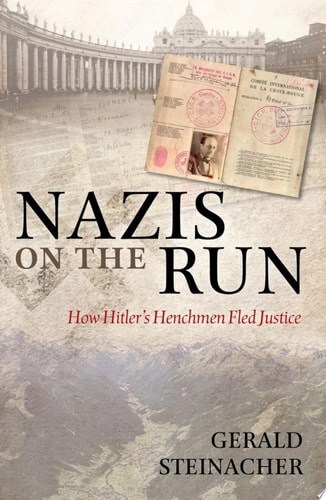
Nazis on the Run
0
0
As an Amazon Associate and affiliate partner, Menrva Books earns from qualifying purchases. Learn more
Author Description
This Is The Story Of How Nazi War Criminals Escaped From Justice At The End Of The Second World War By Fleeing Through The Tyrolean Alps To Italian Seaports, And The Role Played By The Red Cross, The Vatican, And The Secret Services Of The Major Powers In Smuggling Them Away From Prosecution In Europe To A New Life In South America. The Nazi Sympathies Held By Groups And Individuals Within These Organizations Evolved Into A Successful Assistance Network For Fugitive Criminals, Providing Them Not Only With Secret Escape Routes But Hiding Places For Their Loot. Gerald Steinacher Skillfully Traces The Complex Escape Stories Of Some Of The Most Prominent Nazi War Criminals, Including Adolf Eichmann, Showing How They Mingled And Blended With Thousands Of Technically Stateless Or Displaced Persons, All Flooding Across The Alps To Italy And From There, To Destinations Abroad. The Story Of Their Escape Shows Clearly Just How Difficult The Apprehending Of War Criminals Can Be. As Steinacher Shows, All The Major Countries In The Post-war World Had 'mixed Motives' For Their Actions, Ranging From The Shortage Of Trained Intelligence Personnel In The Immediate Aftermath Of The War To The Emerging East-west Confrontation After 1947, Which Led To Many Former Nazis Being Recruited As Agents Turned In The Cold War.
Menrva's Summary
THE THESIS
This book investigates the complex mechanisms and institutional complicity that allowed Nazi war criminals to evade justice in the immediate aftermath of World War II. Gerald Steinacher, a historian specializing in the post-war era, utilizes archival research and declassified documents to map the escape networks known as the ratlines. He argues that the flight of these individuals was not merely a series of isolated incidents but a systemic failure facilitated by the Vatican, the Red Cross, and the competing intelligence interests of Allied powers during the onset of the Cold War.
THE SCOPE MAP
What You Will Find
- Analysis of the Tyrolean Alps escape routes leading to Italian seaports.
- Documentation of the involvement of the Vatican and the International Committee of the Red Cross.
- Examination of the recruitment of former Nazis by Western intelligence agencies for Cold War operations.
- Case studies of high-profile fugitives such as Adolf Eichmann.
Scope Limits
- The text focuses primarily on the European escape routes and does not provide an exhaustive account of every individual fugitive's life in South America.
- It does not cover the internal judicial proceedings of the Nuremberg trials in significant detail.
THE AUTHORITY PERSPECTIVE
Historians and scholars of the post-war period frequently cite this work as a definitive account of the logistical and political realities behind the Nazi escape networks. Readers often note the academic density of the prose, which provides a rigorous, evidence-based examination of a historically sensitive subject.
Page Count:
416
Publication Date:
2012-01-01
Publisher:
Oup Oxford
ISBN-10:
0191653772
ISBN-13:
9780191653773
History
World War
Military History
Cold War
Community Tags
Similar Books