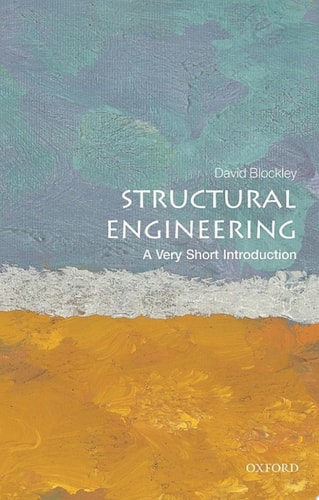
Structural Engineering: A Very Short Introduction
0
0
As an Amazon Associate and affiliate partner, Menrva Books earns from qualifying purchases. Learn more
Author Description
Have You Ever Wondered How It's Possible To Build A Skyscraper, A Big Bridge, A Jumbo Jet, Or A Cruise Liner? Everything Has Structure. Structure Is The Difference Between A Random Pile Of Components And A Fully Functional Object. Through Structure The Parts Connect To Make The Whole. Natural Structures Vary From The Very Smallest Part Of An Atom To The Entire Cosmology Of The Universe. Man-made Structures Include Buildings, Bridges, Dams, Ships, Aeroplanes, Rockets, Trains, Cars And Fair-ground Rides And All Forms Of Artefacts, Even Large Artistic Sculptures. The Wide Range Of Different Industries In Which Structural Engineers Work Includes Construction, Transport, Manufacturing, And Aerospace. In This Very Short Introduction, David Blockley Explores, In Non-technical Language, What Structural Engineering Is All About, Including Examples Ranging From The Shard In London And The Golden Gate Bridge In San Francisco To Jumbo Jets Like The A380 And The Queen Elizabeth Cruise Liner. About The Series: The Very Short Introductions Series From Oxford University Press Contains Hundreds Of Titles In Almost Every Subject Area. These Pocket-sized Books Are The Perfect Way To Get Ahead In A New Subject Quickly. Our Expert Authors Combine Facts, Analysis, Perspective, New Ideas, And Enthusiasm To Make Interesting And Challenging Topics Highly Readable.
Menrva's Summary
THE THESIS
This book investigates the fundamental principles of structural engineering and how they enable the creation of complex, functional objects in both the natural and man-made worlds. David Blockley, an expert in the field, utilizes a non-technical framework to explain how structural integrity transforms a collection of components into a cohesive system. He draws upon diverse examples from civil engineering, aerospace, and architecture to illustrate the core concepts of load-bearing, stability, and design.
THE SCOPE MAP
What You Will Find
- Analysis of iconic structures including The Shard, the Golden Gate Bridge, and the A380 aircraft.
- Exploration of structural applications across construction, transport, and manufacturing industries.
- Conceptual explanations of how parts connect to form functional wholes.
Scope Limits
- The text avoids complex mathematical derivations and highly technical engineering jargon.
- It does not serve as a comprehensive design manual or textbook for professional engineers.
THE AUTHORITY PERSPECTIVE
Readers frequently note that this text provides an accessible entry point for laypeople interested in the mechanics of the built environment. Experts highlight this as a concise, foundational overview that successfully bridges the gap between abstract engineering theory and tangible real-world applications.
Page Count:
144
Publication Date:
2014-01-01
Publisher:
Oup Oxford
ISBN-10:
0191652083
ISBN-13:
9780191652080
Science
Non-Fiction
Architecture
Engineering
Structural Engineering
Technology