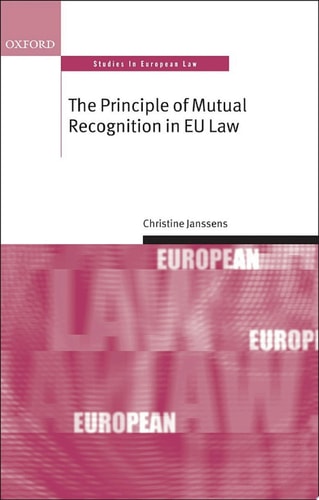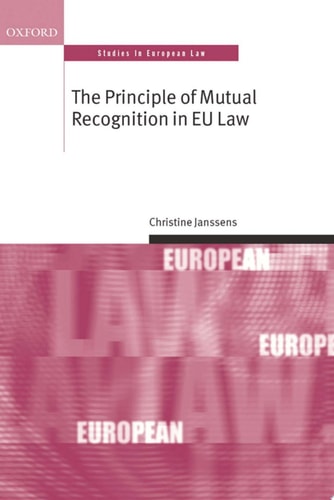
The Principle of Mutual Recognition in EU Law
0
0
As an Amazon Associate and affiliate partner, Menrva Books earns from qualifying purchases. Learn more
Author Description
Examining The Principle Of Mutual Recognition In The Eu Legal Order, This Book Takes A Cross-policy Approach To Focus On The Principle In The Internal Market And In The Criminal Justice Area. It Asks Whether The Principle Of Mutual Recognition, As Developed In Relation To The Free Movement Provisions (internal Market), Can Equally Be Applied In Judicial Cooperation In Criminal Matters (the Area Of Freedom, Security, And Justice), And If Such A Cross-policy Application Is Desirable. Divided Into Three Parts, The Book First Looks At The Way This Principle Functions In The Internal Market. Part Ii Examines How The Principle Works In Judicial Cooperation In Criminal Matters, With The Final Part Answering The Book's Central Questions. In Each Part, Further Related Questions Are Asked: What Is The Object Of The Principle Of Mutual Recognition? Who Are The Main Actors Involved? How Does The Mechanism Of Mutual Recognition Operate (with An Emphasis On The Existing Limits To Mutual Recognition)? How Does Mutual Recognition Relate To Harmonization And To Mutual Trust? What Is The Relevance Of Equivalence Requirements And The Distribution Of Competence Between The Home (issuing) State And The Host (executing) State? What Are The Main Characteristics Of The Principle Of Mutual Recognition? And Is It A Workable Principle? Through An In-depth Analysis Of The Relevant Treaty Provisions, Eu Legislation, Eu Case Law, And Eu Policy Documents, The Book Comes To The Conclusion That A Cross-policy Application Of The Principle Of Mutual Recognition Is Both Feasible And Desirable.
Menrva's Summary
THE THESIS
This book investigates whether the principle of mutual recognition, originally developed for the internal market, can be effectively and desirably applied to judicial cooperation in criminal matters within the European Union. Christine Janssens, a legal scholar, utilizes an extensive analysis of treaty provisions, EU legislation, and case law to construct a comparative framework. The author evaluates the functional mechanics of the principle across different policy areas to determine its viability as a cohesive legal standard.
THE SCOPE MAP
What You Will Find
- Comparative analysis of mutual recognition in the internal market versus criminal justice
- Examination of the relationship between mutual recognition, harmonization, and mutual trust
- Assessment of competence distribution between issuing and executing states
Scope Limits
- Does not provide a comprehensive history of all EU legal principles beyond mutual recognition
- Focuses primarily on the feasibility of cross-policy application rather than political implementation strategies
THE AUTHORITY PERSPECTIVE
Legal scholars and practitioners view this work as a rigorous examination of the cross-policy integration of EU legal principles. Readers frequently note the academic density of the prose and the thoroughness of the case law analysis provided by the author.
Page Count:
408
Publication Date:
2013-01-01
Publisher:
Oup Oxford
ISBN-10:
0191653888
ISBN-13:
9780191653889
Legal Theory
Law
European Union
International Law