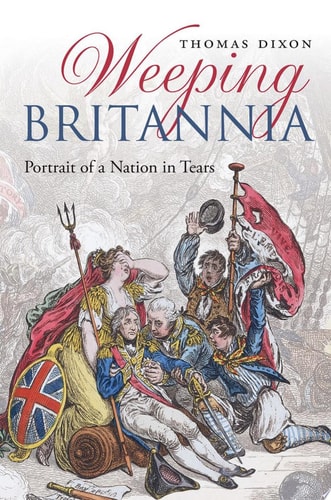
Weeping Britannia
0
0
As an Amazon Associate and affiliate partner, Menrva Books earns from qualifying purchases. Learn more
Author Description
There Is A Persistent Myth About The British: That We Are A Nation Of Stoics, With Stiff Upper Lips, Repressed Emotions, And Inactive Lachrymal Glands. Weeping Britannia - The First History Of Crying In Britain - Comprehensively Debunks This Myth. Far From Being A Persistent Element In The 'national Character', The Notion Of The British Stiff Upper Lip Was In Fact The Product Of A Relatively Brief And Militaristic Period Of Our Past, From About 1870 To 1945. In Earlier Times We Were A Nation Of Proficient, Sometimes Virtuosic Moral Weepers. To Illustrate This Perhaps Surprising Fact, Thomas Dixon Charts Six Centuries Of Weeping Britons, And Theories About Them, From The Medieval Mystic Margery Kempe In The Early Fifteenth Century, To Paul Gascoigne's Famous Tears In The Semi-finals Of The 1990 World Cup. In Between, The Book Includes The Tears Of Some Of The Most Influential Figures In British History, From Oliver Cromwell To Margaret Thatcher (not Forgetting George Iii, Queen Victoria, Charles Darwin, And Winston Churchill Along The Way). But The History Of Weeping In Britain Is Not Simply One Of Famous Tear-stained Individuals. These Tearful Micro-histories All Contribute To A Bigger Picture Of Changing Emotional Ideas And Styles Over The Centuries, Touching On Many Other Fascinating Areas Of Our History. For Instance, The Book Also Investigates The Histories Of Painting, Literature, Theatre, Music And The Cinema To Discover How And Why People Have Been Moved To Tears By The Arts, From The Sentimental Paintings And Novels Of The Eighteenth Century And The Romantic Music Of The Nineteenth, To Hollywood Weepies, Expressionist Art, And Pop Music In The Twentieth Century. Weeping Britannia Is Simultaneously A Museum Of Tears And A Philosophical Handbook, Using History To Shed New Light On The Changing Nature Of Britishness Over Time, As Well As The Ever-shifting Ways In Which We Express And Understand Our Emotional Lives. The Story That Emerges Is One In Which A Previ
Menrva's Summary
THE THESIS
This book investigates the historical evolution of emotional expression in Britain, specifically challenging the myth of the 'stiff upper lip' as a permanent national trait. Thomas Dixon, a historian of emotions, utilizes a vast array of primary sources—ranging from personal diaries and political records to artistic critiques—to argue that the British have historically been a culture of frequent and public weeping. He posits that the stoicism associated with British identity is a relatively modern construct, emerging primarily between 1870 and 1945, rather than an inherent character trait.
THE SCOPE MAP
What You Will Find
- A chronological analysis of British emotional expression spanning six centuries.
- Case studies of historical figures including Oliver Cromwell, Queen Victoria, Charles Darwin, and Margaret Thatcher.
- An exploration of how literature, painting, theater, and cinema have influenced and reflected emotional norms.
Scope Limits
- The analysis is geographically restricted to Britain and does not provide a comparative global history of weeping.
- The text focuses primarily on documented historical figures and artistic movements rather than the private emotional lives of the general populace.
THE AUTHORITY PERSPECTIVE
Scholars and critics recognize this work as a significant contribution to the history of emotions, noting its ability to synthesize complex cultural shifts into an accessible narrative. Readers frequently highlight the author's meticulous research and his skill in connecting individual anecdotes to broader societal changes.
Page Count:
400
Publication Date:
2015-01-01
Publisher:
Oup Oxford
ISBN-10:
0191663565
ISBN-13:
9780191663567
History
Psychology
Emotions
British History
Sociology
Cultural History
Community Tags
Similar Books