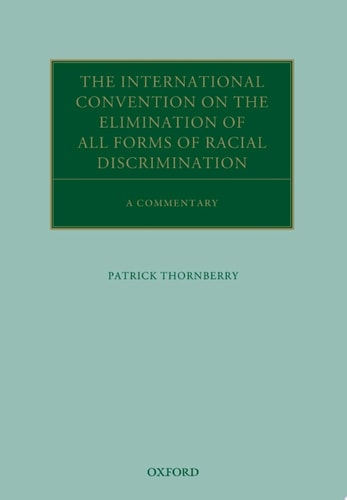
The International Convention on the Elimination of All Forms of Racial Discrimination: A Commentary
0
0
As an Amazon Associate and affiliate partner, Menrva Books earns from qualifying purchases. Learn more
Author Description
The Convention on the Elimination of All Forms of Racial Discrimination is the centrepiece of international efforts to address racial discrimination, defined in broad terms to include discrimination based on skin colour, descent, ethnic, and national origin. Victims of discrimination within the scope of the Convention include minorities, indigenous peoples, non-citizens, and caste or descent groups. Virtually all national societies are diverse in terms of ethnicity or 'race' and none is free from discrimination, making it one of the great issues of our time. Against the background of international human rights standards and mechanisms to counter racial and ethnic discrimination, this book provides the first comprehensive legal analysis of the provisions of the Convention on an article-by article basis. The book addresses the place of the Convention within the broader framework of United Nation's action against discrimination. The different chapters analyse and discuss broad topics of race, ethnicity, and international law, the genesis and drafting of the Convention, the aims and objectives of the Convention in light of its preamble, and principles of non-discrimination and equality. In particular, the book includes a critical appraisal of the contribution of the Convention to the eradication of racial discrimination. It also reflects on whether there is scope for modification of the substance or procedures of the Convention in light of challenges arising from enhanced transnational population movements, the intersection between discrimination on the ground of race and discrimination against religious communities, and the intersection of racial and gender-based discrimination.
Menrva's Summary
THE THESIS
This book investigates the legal efficacy and structural framework of the International Convention on the Elimination of All Forms of Racial Discrimination (ICERD) as a primary mechanism for addressing global racial inequality. Patrick Thornberry, a recognized scholar in international human rights law, provides a systematic, article-by-article analysis of the Convention. By situating the text within the broader context of United Nations human rights standards, the author evaluates the Convention's historical drafting, its core principles of equality, and its practical application in diverse national societies.
THE SCOPE MAP
What You Will Find
- Article-by-article legal commentary on the ICERD provisions
- Historical analysis of the Convention's genesis and drafting process
- Examination of intersectional discrimination, including race, gender, and religion
- Discussion of transnational population movements and their impact on legal frameworks
Scope Limits
- Does not provide a general history of global race relations outside of the legal framework of the Convention
- Does not offer a comprehensive sociological study of all national anti-discrimination laws
THE AUTHORITY PERSPECTIVE
Legal scholars and practitioners frequently cite this work as a foundational reference for understanding the complexities of international anti-discrimination law. Experts highlight the text's academic rigor and its utility as a primary resource for interpreting the Convention's evolving role in contemporary human rights discourse.
Page Count:
564
Publication Date:
2016-01-01
Publisher:
OUP Oxford
ISBN-10:
0191669679
ISBN-13:
9780191669675
Human rights
Professional Career & Trade
Reference
International Law
Law
Sociology
Community Tags
Similar Books