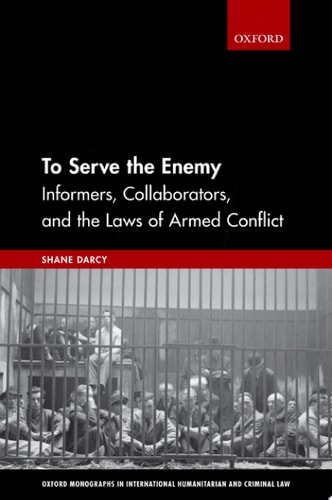
To Serve The Enemy
0
0
As an Amazon Associate and affiliate partner, Menrva Books earns from qualifying purchases. Learn more
Author Description
A Constant Yet Oftentimes Concealed Practice In War Has Been The Use Of Informers And Collaborators By Parties To An Armed Conflict. Despite The Prevalence Of Such Activity, And The Serious And At Times Fatal Consequences That Befall Those Who Collaborate With An Enemy, International Law Applicable In Times Of Armed Conflict Does Not Squarely Address The Phenomenon. The Recruitment, Use And Treatment Of Informers And Other Collaborators Is Addressed Only Partially And At Times Indirectly By International Humanitarian Law. In This Book, Shane Darcy Examines The Development And Application Of The Relevant Rules And Principles Of The Laws Of Armed Conflict In Relation To Collaboration. With A Primary Focus On International Humanitarian Law As May Be Applicable To Various Forms Of Collaboration, The Book Also Offers An Assessment Of The Relevance Of Human Rights And Considers How The Phenomenon Of Collaboration Has Been Addressed Post-conflict.
Menrva's Summary
THE THESIS
This book investigates the legal status and regulatory gaps concerning the recruitment, use, and treatment of informers and collaborators within the framework of international armed conflict. Shane Darcy, an expert in international law, analyzes the intersection of international humanitarian law and human rights law regarding individuals who cooperate with enemy forces. The work evaluates how existing legal principles address the risks faced by collaborators and the accountability of parties who utilize them during and after hostilities.
THE SCOPE MAP
What You Will Find
- Analysis of international humanitarian law provisions regarding collaboration
- Examination of human rights law applications in conflict zones
- Assessment of post-conflict legal responses to collaboration
- Review of historical and contemporary practices of using informers
Scope Limits
- Does not provide a comprehensive history of every specific conflict involving collaborators
- Does not offer a manual for military operational procedures
THE AUTHORITY PERSPECTIVE
Legal scholars and practitioners identify this text as a specialized resource for understanding the often-overlooked intersection of humanitarian law and the practice of collaboration. Readers frequently note the academic density of the prose and the rigorous analytical approach applied to complex legal questions.
Page Count:
200
Publication Date:
2019-01-01
Publisher:
Oxford University Press
ISBN-10:
0191093238
ISBN-13:
9780191093234
International Law
Law
Military History
Human rights
War
Community Tags
Similar Books