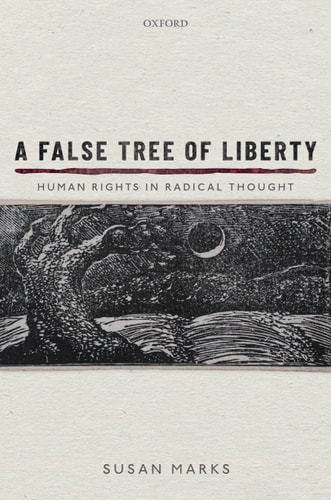
A False Tree of Liberty
0
0
As an Amazon Associate and affiliate partner, Menrva Books earns from qualifying purchases. Learn more
Author Description
This Book Is Concerned With The History Of The Idea Of Human Rights. It Offers A Fresh Approach That Puts Aside Familiar Questions Such As 'where Do Human Rights Come From?' And 'when Did Human Rights Begin?' For The Sake Of Looking Into Connections Between Debates About The Rights Of Man And Developments Within The History Of Capitalism. The Focus Is On England, Where, At The End Of The Eighteenth Century, A Heated Controversy Over The Rights Of Man Coincided With The Final Enclosure Of Common Lands And The Momentous Changes Associated With Early Industrialisation. Tracking Back Still Further To Sixteenth- And Seventeenth-century Writing About Dispossession, Resistance And Rights, The Book Reveals A Forgotten Tradition Of Thought About Central Issues In Human Rights, With Profound Implications For Their Prospects In The World Today.
Menrva's Summary
THE THESIS
This book investigates the historical intersection between the development of human rights discourse and the rise of capitalism in England. Susan Marks, a scholar of international law and human rights, challenges conventional historiography by shifting the focus away from the origins of rights toward the material conditions of dispossession. By examining the enclosure of common lands and early industrialization, she argues that the evolution of rights language is inextricably linked to the economic transformations of the eighteenth century and earlier periods.
THE SCOPE MAP
What You Will Find
- Analysis of sixteenth- and seventeenth-century texts regarding dispossession and resistance.
- Examination of the enclosure movement in England at the end of the eighteenth century.
- A framework connecting political rights discourse to the history of capitalism.
Scope Limits
- The analysis is geographically restricted to England.
- The text does not provide a comprehensive global history of human rights law.
THE AUTHORITY PERSPECTIVE
Scholars frequently cite this work for its critical contribution to the political economy of human rights. Experts note that the text provides a rigorous, specialized perspective that is particularly useful for those studying the intersection of legal history and economic development.
Page Count:
280
Publication Date:
2019-01-01
Publisher:
Oxford University Press
ISBN-10:
0191663549
ISBN-13:
9780191663543
History
Philosophy
British History
Human rights
Economic History
Community Tags
Similar Books