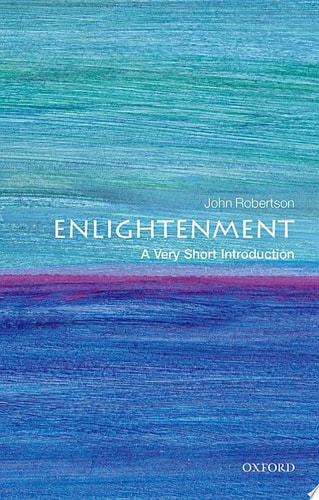
The Enlightenment: A Very Short Introduction
0
0
As an Amazon Associate and affiliate partner, Menrva Books earns from qualifying purchases. Learn more
Author Description
A Foundational Moment In The History Of Modern European Thought, The Enlightenment Continues To Be A Reference Point For Philosophers, Scholars And Opinion-formers. To Many It Remains The Inspiration Of Our Commitments To The Betterment Of The Human Condition. To Others, It Represents The Elevation Of One Set Of European Values To The World, Many Of Whose Peoples Have Quite Different Values. But What Is The Relationship Between The Historical Enlightenment And The Idea Of 'enlightenment', And Can These Two Understandings Be Reconciled? In This Very Short Introduction, John Robertson Offers A Concise Historical Introduction To The Enlightenment As An Intellectual Movement Of Eighteenth-century Europe. Discussing Its Intellectual Achievements, He Also Explores How Its Supporters Exploited New Ways Of Communicating Their Ideas To A Wider Public, Creating A New 'public Sphere' For Critical Discussion Of The Moral, Economic And Political Issues Facing Their Societies. About The Series: The Very Short Introductions Series From Oxford University Press Contains Hundreds Of Titles In Almost Every Subject Area. These Pocket-sized Books Are The Perfect Way To Get Ahead In A New Subject Quickly. Our Expert Authors Combine Facts, Analysis, Perspective, New Ideas, And Enthusiasm To Make Interesting And Challenging Topics Highly Readable.
Menrva's Summary
THE THESIS
This book investigates the historical origins and enduring intellectual legacy of the Enlightenment as a transformative movement in eighteenth-century Europe. John Robertson, a scholar of intellectual history, utilizes a synthesis of primary source analysis and historical context to examine how Enlightenment thinkers reshaped moral, economic, and political discourse. He argues that the movement was defined not only by its philosophical achievements but also by the emergence of a new public sphere that facilitated critical debate.
THE SCOPE MAP
What You Will Find
- An overview of eighteenth-century European intellectual developments
- Analysis of the shift in communication methods and the creation of the public sphere
- Examination of the tension between historical Enlightenment and modern interpretations
Scope Limits
- Does not provide an exhaustive biography of every major Enlightenment figure
- Does not cover non-European intellectual movements in significant detail
THE AUTHORITY PERSPECTIVE
Experts and readers frequently cite this work as a highly accessible entry point for understanding the complexities of Enlightenment thought. The text is noted for its ability to distill dense philosophical history into a concise and readable format for students and general readers alike.
Page Count:
144
Publication Date:
2015-01-01
Publisher:
Oup Oxford
ISBN-10:
0191665126
ISBN-13:
9780191665127
Philosophy
History
18th century
European History
Intellectual History