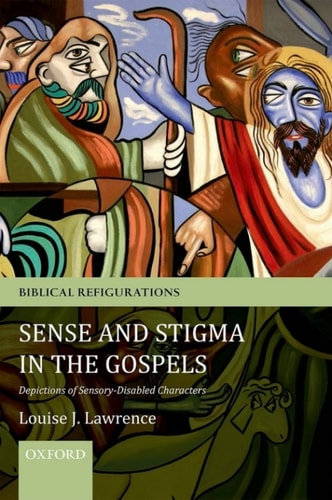
Sense and Stigma in the Gospels: Depictions of Sensory-Disabled Characters
0
0
As an Amazon Associate and affiliate partner, Menrva Books earns from qualifying purchases. Learn more
Author Description
The senses are used within New Testament texts as instruments of knowledge and power and thus constitute important mediators of cultural knowledge and experience. Likewise, those instances where sensory faculty is perceived to be 'disabled' in some way also become key sites for ideological commentary and critique. However, often biblical scholarship, itself 'disabled' by eye-centric and textocentric 'norms', has read sensory-disabled characters as nothing more than inert sites of healing; their agency, including their alternative sensory modes of communication and resistance to oppression, remain largely unaddressed. In response, Louise J. Lawrence seeks to initiate a variety of interdisciplinary dialogues with disability studies and sensory anthropology in a quest to refigure characters with sensory disabilities featured in the gospels and provide alternative interpretations of their conditions and social interactions. In each instance the identity of those stigmatised as 'other' (according to particular physiological, social and cultural 'norms') are recovered by exploring ethnographic accounts which document the stories of those experiencing similar rejection on account of perceived sensory 'difference' in diverse cross-cultural settings. Through this process these 'disabled' characters are recast as individuals capable of employing certain strategies which destabilize the stigma imposed upon them and tactical performers who can subversively achieve their social goals.
Menrva's Summary
THE THESIS
How do sensory-disabled characters in the Gospels function as active agents rather than passive recipients of healing within the ideological framework of New Testament texts? Louise J. Lawrence, a scholar in New Testament studies, challenges traditional eye-centric and textocentric readings of biblical narratives. She argues that these characters possess agency, utilizing alternative modes of communication and resistance to navigate and destabilize the social stigma imposed upon them by their cultural environments.
THE SCOPE MAP
What You Will Find
- Interdisciplinary analysis combining biblical exegesis with disability studies and sensory anthropology.
- Re-evaluations of Gospel narratives featuring characters with sensory impairments.
- Ethnographic comparisons using cross-cultural accounts of individuals experiencing sensory difference.
- Tactical frameworks for interpreting character agency and subversion.
Scope Limits
- The study focuses specifically on sensory-disabled characters within the Gospels rather than a comprehensive survey of all disability types in the entire Bible.
- The analysis does not attempt to provide a medical history of the conditions described, but rather a socio-cultural and ideological reading of the texts.
THE AUTHORITY PERSPECTIVE
Scholars in the field of biblical studies recognize this work as a significant contribution to the intersection of disability theory and New Testament hermeneutics. Readers frequently note the academic density of the prose and the author's rigorous application of ethnographic methodology to ancient texts.
Page Count:
208
Publication Date:
2013-01-01
Publisher:
OUP Oxford
ISBN-10:
019166748X
ISBN-13:
9780191667480
Religion
Anthropology
Sociology of Religion
Bibles
Theology
Theological Anthropolgy
New Testament
Community Tags
Similar Books