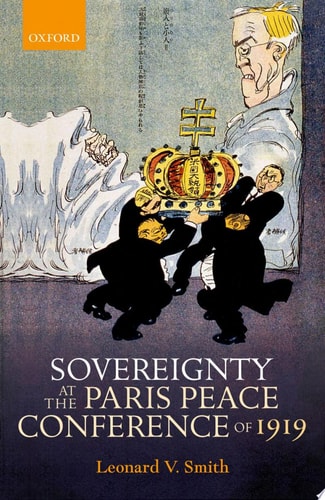
Sovereignty at the Paris Peace Conference of 1919
0
0
As an Amazon Associate and affiliate partner, Menrva Books earns from qualifying purchases. Learn more
Author Description
We Have Known For Many Decades That The Paris Peace Conference Of 1919 Failed, In The Sense That It Did Not Prevent The Outbreak Of World War Ii. This Book Investigates Not Whether The Paris Peace Conference Succeeded Or Failed, But The Historically Specific International System It Created. It Explores The Rules Under Which That System Operated, And The Kinds Of States And Empires That Inhabited It. Deepening The Dialogue Between History And International Relations Theory Makes It Possible To Think About Sovereignty At The Paris Peace Conference In New Ways. Sovereignty In 1919 Was About Not Just Determining Of Answers Demarcating The International System, But Also The Questions. Sovereignty In 1919 Was About Remaking The World. Most Histories Of The Paris Peace Conference Stop With The Signing Of The Treaty Of Versailles With Germany On 28 June 1919. Sovereignty At The Paris Peace Conference Of 1919 Considers All Five Treaties Produced By The Conference As Well As The Treaty Of Lausanne With Turkey In 1923. It Is Organized Not Chronologically Or Geographically, But According To Specific Problems Of Sovereignty. A Peace Based On Justice Produced A Criminalized Great Power In Germany, And A Template Problematically Applied In The Other Treaties. The Conference Sought To Unmix Lands And Peoples In The Defeated Multinational Empires By Drawing Boundaries And Defining Ethnicities. The Conference Sought Not So Much To Oppose Revolution As To Instrumentalize It In The New International System. The League Of Nations, So Often Taken As The Supreme Symbol Of The Failure Of The Conference, Is Better Considered As A Continuation Of The Laboratory Of Sovereignty Established In Paris.
Menrva's Summary
THE THESIS
This book investigates the specific international system created by the Paris Peace Conference of 1919, focusing on how the concept of sovereignty was redefined rather than merely evaluating the conference's success or failure. Leonard V. Smith, a historian specializing in the era, utilizes a framework that bridges historical analysis with international relations theory. By examining the rules and structures established in 1919, the author argues that the conference functioned as a laboratory for sovereignty, fundamentally altering how states and empires interacted within the global order.
THE SCOPE MAP
What You Will Find
- Analysis of the five primary treaties produced by the Paris Peace Conference.
- Examination of the 1923 Treaty of Lausanne as a critical component of the post-war order.
- A thematic exploration of sovereignty, boundary demarcation, and the instrumentalization of revolution.
- Re-evaluation of the League of Nations as a functional extension of the conference's systemic goals.
Scope Limits
- The text does not provide a standard chronological narrative of the conference proceedings.
- It avoids a binary assessment of the conference as a success or failure in preventing subsequent global conflict.
THE AUTHORITY PERSPECTIVE
Scholars and historians recognize this work as a significant contribution to diplomatic history for its departure from traditional chronological accounts. Readers frequently note the academic density of the prose, which is best suited for those familiar with international relations theory and early 20th-century political structures.
Page Count:
352
Publication Date:
2018-01-01
Publisher:
Oxford University Press
ISBN-10:
0191664855
ISBN-13:
9780191664854
History
International relations
20th Century
Diplomatic History
Community Tags
Other Editions(3)

Similar Books


Reader Comments
Share Your Thoughts
No comments yet. Be the first to share your thoughts!