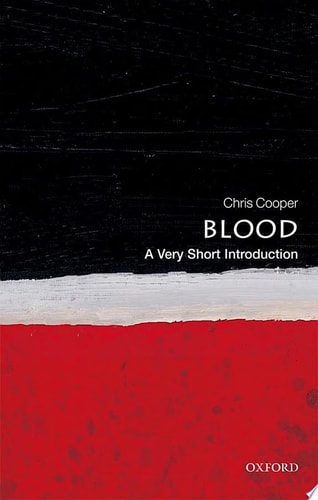
Blood: A Very Short Introduction
0
0
As an Amazon Associate and affiliate partner, Menrva Books earns from qualifying purchases. Learn more
Author Description
Blood is vital to most animals. In mammals it transports oxygen and food, carries away waste, and contains the white cells that attack invading microbes. Playing a central role in life, it has had profound cultural and historical significance and plays an important role in religious ritual. Blood was one of the four humours in early Western medicine and is still probably the major diagnostic tool in the doctor's armoury. In this Very Short Introduction, Chris Cooper analyses the components of blood, explains blood groups, and looks at transfusions, blood tests, and blood-borne diseases. He considers what the future may hold, including the possibility of making artificial blood, and producing blood from stem cells in the laboratory. ABOUT THE SERIES: The Very Short Introductions series from Oxford University Press contains hundreds of titles in almost every subject area. These pocket-sized books are the perfect way to get ahead in a new subject quickly. Our expert authors combine facts, analysis, perspective, new ideas, and enthusiasm to make interesting and challenging topics highly readable.
Menrva's Summary
THE THESIS
What are the biological, historical, and medical functions of blood, and how does it continue to shape modern clinical practice? Chris E. Cooper, a professor of biochemistry, synthesizes complex physiological data with historical context to explain the multifaceted nature of blood. He examines the fluid's role as a transport mechanism for life-sustaining nutrients and its significance as a diagnostic indicator in contemporary medicine. The text provides a framework for understanding both the fundamental components of blood and the future of hematological research.
THE SCOPE MAP
What You Will Find
- Biological composition of blood including plasma, red cells, and white cells
- Historical overview of the four humours and cultural symbolism
- Technical explanation of blood groups and transfusion mechanics
- Analysis of current diagnostic blood tests and blood-borne pathogens
- Future outlook on artificial blood and stem cell research
Scope Limits
- Does not provide clinical medical advice or diagnostic procedures for individuals
- Does not cover exhaustive veterinary hematology beyond general mammalian comparisons
THE AUTHORITY PERSPECTIVE
Readers frequently note the accessible yet dense nature of the prose, which balances technical accuracy with general readability. Experts highlight this as a foundational text for students and laypeople seeking a concise overview of hematology.
Page Count:
168
Publication Date:
2016-01-01
Publisher:
OUP Oxford
ISBN-10:
0191665177
ISBN-13:
9780191665172
Non-Fiction
Science
Medicine
Hematology
Biology