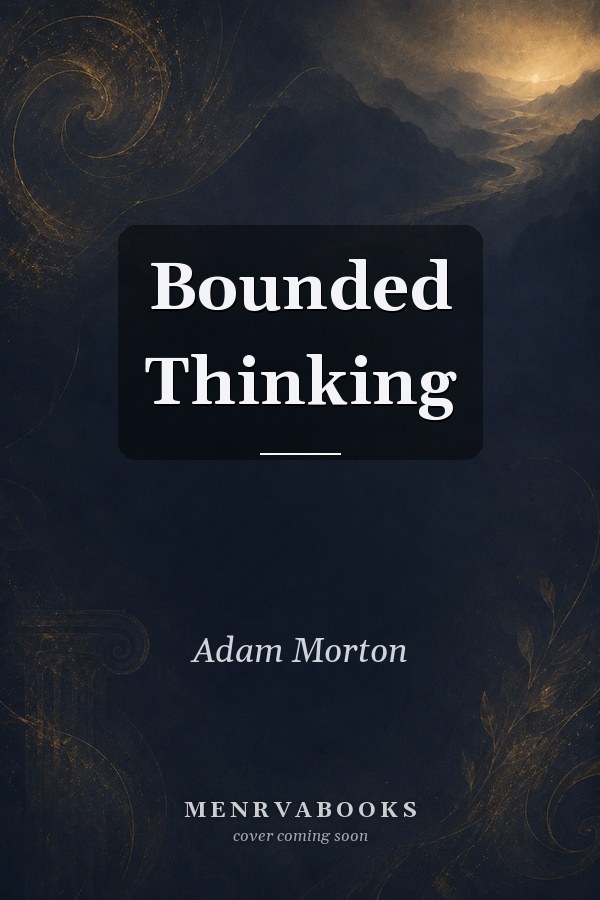
Bounded Thinking
0
0
As an Amazon Associate and affiliate partner, Menrva Books earns from qualifying purchases. Learn more
Author Description
Bounded Thinking Offers A New Account Of The Virtues Of Limitation Management: Intellectual Virtues Of Adapting To The Fact That We Cannot Solve Many Problems That We Can Easily Describe. Adam Morton Argues That We Do Give One Another Guidance On Managing Our Limitations, But That This Has To Be In Terms Of Virtues And Not Of Rules, And In Terms Of Success--knowledge And Accomplishment--rather Than Rationality. He Establishes A Taxonomy Of Intellectual Virtues, Which Includes 'paradoxical Virtues' That Sound Like Vices, Such As The Virtue Of Ignoring Evidence And The Virtue Of Not Thinking Too Hard. There Are Also Virtues Of Not Planning Ahead, In That Some Forms Of Such Planning Require Present Knowledge Of One's Future Knowledge That Is Arguably Impossible. A Person's Best Response To Many Problems Depends Not On The Most Rationally Promising Solution To Solving Them But On The Most Likely Route To Success Given The Profile Of Intellectual Virtues That The Person Has And Lacks. Morton Illustrates His Argument With Discussions Of Several Paradoxes And Conundra. He Closes The Book With A Discussion Of Intelligence And Rationality, And Argues That Both Have Very Limited Usefulness In The Evaluation Of Who Will Make Progress On Which Problems.
Menrva's Summary
THE THESIS
This book investigates how individuals can effectively navigate complex problems when their cognitive capacity is inherently limited. Adam Morton, a philosopher, challenges the traditional focus on pure rationality by proposing a framework centered on intellectual virtues. He argues that success in problem-solving often requires specific habits of mind—such as knowing when to ignore evidence or avoid over-planning—rather than adherence to rigid logical rules.
THE SCOPE MAP
What You Will Find
- A taxonomy of intellectual virtues including paradoxical traits
- Analysis of the limitations of traditional rationality and planning
- Philosophical examination of intelligence in the context of problem-solving
Scope Limits
- The text does not provide a prescriptive self-help manual for daily decision-making
- It does not offer a comprehensive history of virtue ethics
THE AUTHORITY PERSPECTIVE
Experts recognize this work as a significant contribution to contemporary epistemology and the study of cognitive limitations. Readers frequently note the academic density of the prose, which is best suited for those familiar with philosophical discourse on rationality.
Page Count:
177
Publication Date:
1900-01-01
ISBN-10:
0191746193
ISBN-13:
9780191746192
Philosophy
Epistemology
Rationality