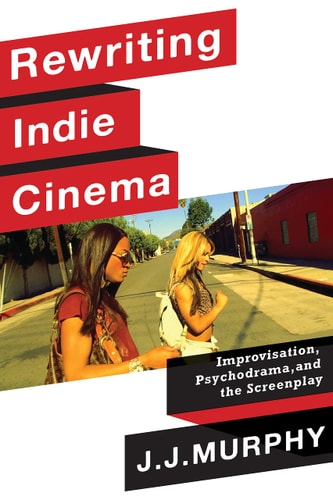
Rewriting Indie Cinema: Improvisation, Psychodrama, and the Screenplay
0
0
As an Amazon Associate and affiliate partner, Menrva Books earns from qualifying purchases. Learn more
Author Description
Most films rely on a script developed in pre-production. Yet beginning in the 1950s and continuing through the recent mumblecore movement, key independent filmmakers have broken with the traditional screenplay. Instead, they have turned to new approaches to scripting that allow for more complex characterization and shift the emphasis from the page to performance. In Rewriting Indie Cinema, J. J. Murphy explores these alternative forms of scripting and how they have shaped American film from the 1950s to the present. He traces a strain of indie cinema that used improvisation and psychodrama, a therapeutic form of improvised acting based on a performer's own life experiences. Murphy begins in the 1950s and 1960s with John Cassavetes, Shirley Clarke, Barbara Loden, Andy Warhol, Norman Mailer, William Greaves, and other independent directors who sought to create a new type of narrative cinema. In the twenty-first century, filmmakers such as Gus Van Sant, the Safdie brothers, Joe Swanberg, and Sean Baker developed similar strategies, sometimes benefitting from the freedom of digital technology. In reading key films and analyzing their techniques, Rewriting Indie Cinema demonstrates how divergence from the script has blurred the divide between fiction and nonfiction. Showing the ways in which filmmakers have striven to capture the subtleties of everyday behavior, Murphy provides a new history of American indie filmmaking and how it challenges Hollywood industrial practices.
Menrva's Summary
THE THESIS
This book investigates how independent filmmakers have subverted traditional screenwriting by employing improvisation and psychodrama to achieve greater character depth and performance-driven narratives. J. J. Murphy, drawing on his expertise in film studies, examines a lineage of American indie cinema from the 1950s to the present day. He analyzes the techniques of directors like John Cassavetes and Gus Van Sant, who utilized performers' personal experiences and spontaneous creation to blur the lines between fiction and nonfiction. The book demonstrates how these alternative scripting methods challenge conventional Hollywood production and capture the nuances of real behavior.
THE SCOPE MAP
- Exploration of alternative scripting methods in independent cinema, moving beyond the traditional screenplay.
- Analysis of improvisation and psychodrama as key techniques employed by filmmakers.
- Historical tracing of these approaches from the 1950s and 1960s (Cassavetes, Clarke, Warhol) to the 21st century (Safdie brothers, Swanberg, Baker).
- Examination of how these techniques contribute to complex characterization and emphasize performance.
- Discussion of the impact of digital technology on contemporary indie filmmaking practices.
- Demonstration of how divergence from the script blurs the divide between fiction and nonfiction.
- A new history of American indie filmmaking that challenges industrial practices.
THE AUTHORITY PERSPECTIVE
The book is recognized for its in-depth exploration of alternative scripting techniques in independent cinema, tracing a significant lineage from mid-20th century pioneers to contemporary filmmakers. It is noted for its analysis of how improvisation and psychodrama contribute to richer characterization and a more performance-centric approach to filmmaking. The work is praised for providing a fresh historical perspective on American indie cinema and its challenge to mainstream production models. It effectively demonstrates how these methods have blurred the boundaries between fiction and nonfiction, capturing the subtleties of everyday behavior.
Page Count:
337
Publication Date:
2019-01-01
Publisher:
Columbia University Press
ISBN-10:
0231191960
ISBN-13:
9780231191968
History
Non-Fiction
Art
Screenwriting
Psychodrama
Improvisation
Film Studies
Cinema History
Community Tags
Similar Books