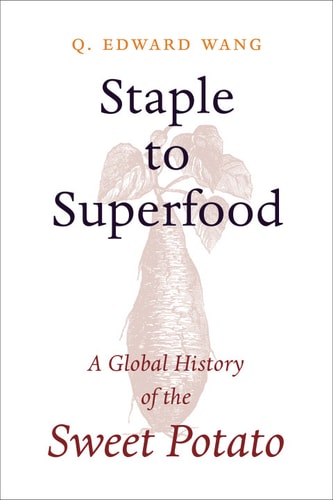
Staple to Superfood
0
0
As an Amazon Associate and affiliate partner, Menrva Books earns from qualifying purchases. Learn more
Author Description
Sweet potatoes were among the American crops Christopher Columbus brought back to Europe—where they were thought to be an aphrodisiac. In China, this versatile root became a staple that fueled rapid population growth. Introduced to Japan to stave off famine, sweet potatoes later sustained the country’s imperial expansion. Because this hardy plant can thrive in almost any soil, it has long been cultivated as a subsistence crop in Southeast Asia, Africa, and Oceania. In recent years, Western health experts have begun touting the humble sweet potato as a “superfood” with numerous nutritional benefits. Considering these events and many others, Staple to Superfood explores the sweet potato’s rich history and remarkable global influence. Q. Edward Wang demonstrates how this resilient root has not only nourished communities but also defined their identities. Tracing its journeys through the intricate networks of global trade and cultural exchange, he shows how the sweet potato transformed agricultural practices, culinary traditions, and social structures worldwide. From the Americas to Europe to Asia and the Pacific, the spread of this crop illuminates the varied paths that global development has taken. Wang also contrasts the sweet potato with its botanically unrelated namesake, the white potato. Blending agricultural, cultural, and historical perspectives, Staple to Superfood offers a fresh look at the power of food to transform societies. It is a compelling exploration of how the sweet potato shaped the modern world and continues to influence global food systems today.
Menrva's Summary
THE THESIS
The humble sweet potato, a crop that traveled from the Americas to become a global staple, has profoundly shaped societies and identities worldwide. Q. Edward Wang, a historian specializing in global development and food systems, traces the sweet potato's remarkable journey through intricate networks of global trade and cultural exchange. Drawing on agricultural, cultural, and historical perspectives, Wang demonstrates how this resilient root not only nourished communities but also defined their identities, transformed agricultural practices, and influenced culinary traditions. The book contrasts the sweet potato's impact with that of the white potato, offering a fresh look at how food has the power to transform societies and shape the modern world.
THE SCOPE MAP
- The historical journey of the sweet potato from the Americas to Europe, Asia, Africa, and Oceania.
- The sweet potato's role in population growth, famine prevention, and imperial expansion.
- The transformation of agricultural practices, culinary traditions, and social structures worldwide due to the sweet potato.
- A comparative analysis of the sweet potato and the white potato.
- The sweet potato's recent recognition as a 'superfood' in Western health circles.
- The sweet potato's influence on global food systems and its connection to global development.
THE AUTHORITY PERSPECTIVE
The book is presented as a comprehensive exploration of the sweet potato's historical significance and global influence. It aims to blend agricultural, cultural, and historical perspectives to illustrate the power of food in shaping societies. The narrative traces the crop's journey across continents, highlighting its impact on demographics, economies, and cultural identities. The work is positioned as a fresh look at how a single food item can transform the modern world and continue to influence global food systems.
Page Count:
0
Publication Date:
2025-12-16
Publisher:
Columbia University Press
ISBN-10:
0231561709
ISBN-13:
9780231561709
History
Non-Fiction
Food History
Agriculture
Cultural History
Community Tags
Similar Books