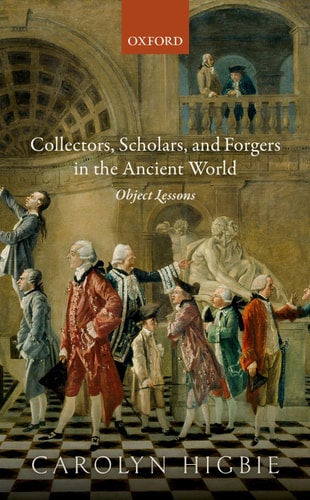
Collectors, Scholars, and Forgers in the Ancient World: Object Lessons
0
0
As an Amazon Associate and affiliate partner, Menrva Books earns from qualifying purchases. Learn more
Author Description
Collectors, Scholars, and Forgers in the Ancient World focuses on the fascination which works of art, texts, and antiquarian objects inspired in Greeks and Romans in antiquity and draws parallels with other cultures and eras to offer contexts for understanding that fascination. Statues, bronze weapons, books, and bones might have been prized for various reasons: because they had religious value, were the work of highly regarded artists and writers, had been possessed by famous mythological figures, or were relics of a long disappeared past. However, attitudes towards these objects also changed over time: sculpture which was originally created for a religious purpose became valuable as art and could be removed from its original setting, while historians discovered value in inscriptions and other texts for supporting historical arguments and literary scholars sought early manuscripts to establish what authors really wrote. As early as the Hellenistic era, some Greeks and Romans began to collect objects and might even display them in palaces, villas, or gardens; as these objects acquired value, a demand was created for more of them, and so copyists and forgers created additional pieces - while copyists imitated existing pieces of art, sometimes adapting to their new settings, forgers created new pieces to complete a collection, fill a gap in historical knowledge, make some money, or to indulge in literary play with knowledgeable readers. The study of forged relics is able to reveal not only what artefacts the Greeks and Romans placed value on, but also what they believed they understood about their past and how they interpreted the evidence for it. Drawing on the latest scholarship on forgery and fakes, as well as a range of examples, this book combines stories about frauds with an analysis of their significance, and illuminates and explores the link between collectors, scholars, and forgers in order to offer us a way to better understand the power that objects held ov
Menrva's Summary
THE THESIS
This book investigates the motivations behind the ancient Greek and Roman fascination with antiquities, art, and relics, and how this desire for possession fueled the emergence of forgery. Carolyn Higbie, a scholar of classical history, utilizes a wide array of archaeological evidence, literary texts, and historical records to examine how objects transitioned from religious or functional items into prized collectibles. She argues that the study of these forgeries provides a unique window into the values, historical interpretations, and intellectual priorities of ancient societies.
THE SCOPE MAP
What You Will Find
- Analysis of the transition of objects from religious settings to private collections.
- Examination of the roles played by copyists and forgers in meeting the demand for antiquities.
- Case studies involving statues, bronze weapons, manuscripts, and historical relics.
- Comparative perspectives linking ancient practices to broader historical contexts of collecting.
Scope Limits
- The text focuses primarily on the Greco-Roman world and does not provide an exhaustive global history of forgery.
- It does not serve as a technical manual for identifying modern archaeological fakes.
THE AUTHORITY PERSPECTIVE
Scholars and readers frequently note that this work provides a nuanced look at the intersection of classical scholarship and the history of art collecting. Experts highlight the text as a valuable contribution to understanding how ancient cultures constructed their own historical narratives through the acquisition and fabrication of material culture.
Page Count:
276
Publication Date:
1900-01-01
Publisher:
Oxford University Press
ISBN-10:
0191819875
ISBN-13:
9780191819872
History
Ancient History
Cultural History
Art History
Archaeology
Community Tags
Other Editions(2)
Similar Books

Reader Comments
Share Your Thoughts
No comments yet. Be the first to share your thoughts!