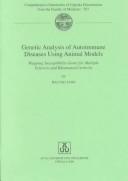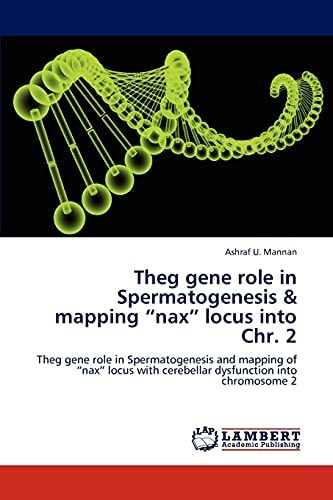
Theg Gene Role in Spermatogenesis and Mapping Nax Locus Into Chr
0
0
As an Amazon Associate and affiliate partner, Menrva Books earns from qualifying purchases. Learn more
Author Description
Stage-specific interactions between Sertoli cells and germ cells plays central role in the regulation of spermatogenesis. In the first part of the study, function of Theg (testicular haploid expressed gene) gene was characterized. Theg is specifically expressed in spermatid cells. Its expression is upregulated by some unknown factor(s) from Sertoli cells. To elucidate the function of THEG protein and its role in spermatogenesis, we disrupted the Theg locus in mouse by homologous recombination. The Theg knockout mice from two different genetic backgrounds appeared normal and were fertile, with no gross abnormalities detected in testicular morphology or sperm properties. Our results from knockout mouse model systems clearly illustrate that Theg is not essential for spermatogenesis in the mouse. During the generation Theg knockout mice, an intriguing mutation was discovered, which we named as nax. The nax mice exhibit delayed hair appearance and ataxia in a homozygote state. Histological analyses of nax brain revealed an overall impairment of the cerebellar cortex. We mapped the nax locus between marker D2Mit158 and D2Mit100 within a region of 800 kb in the middle of chromosome 2.
Menrva's Summary
THE THESIS
Theg gene's role in spermatogenesis is investigated, revealing it is not essential for the process in mice. The study first characterizes the function of the Theg gene, which is specifically expressed in spermatid cells and upregulated by Sertoli cells. To determine its function, Theg locus was disrupted in mice, but the resulting knockout mice appeared normal and fertile, with no gross abnormalities in testicular morphology or sperm properties. This indicates Theg is not essential for spermatogenesis in mice.
THE SCOPE MAP
- Characterization of the Theg (testicular haploid expressed gene) gene's function.
- Analysis of Theg gene expression specifically in spermatid cells.
- Investigation into the upregulation of Theg expression by Sertoli cells.
- Creation and analysis of Theg knockout mice to assess its essentiality for spermatogenesis.
- Discovery and characterization of the 'nax' mutation in Theg knockout mice.
- Phenotypic analysis of nax mice, including delayed hair appearance and ataxia.
- Histological examination of nax brain revealing cerebellar cortex impairment.
- Mapping of the nax locus to a specific region on chromosome 2.
THE AUTHORITY PERSPECTIVE
The study presents findings on the Theg gene's role in spermatogenesis, concluding it is not essential in mice based on knockout models. It also details the discovery and mapping of an associated mutation, 'nax', which causes neurological and hair-related phenotypes. The research contributes to understanding gene function in reproductive biology and genetic mapping techniques.
Page Count:
176
Publication Date:
2012-04-01
Publisher:
Lap Lambert Academic Publishing GmbH KG
ISBN-10:
384654602X
ISBN-13:
9783846546024
Science
Non-Fiction
Genetics
Animal models
Neuroscience
Community Tags
Similar Books