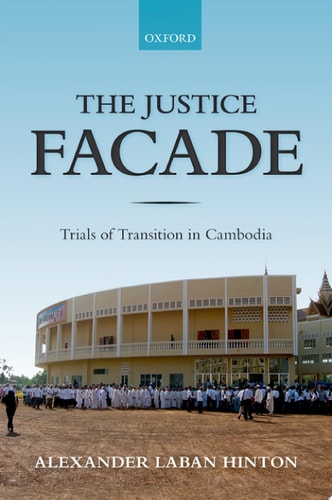
The Justice Facade: Trials of Transition in Cambodia
0
0
As an Amazon Associate and affiliate partner, Menrva Books earns from qualifying purchases. Learn more
Author Description
For survivors of the brutal Khmer Rouge Regime, western instruments of justice are small plasters on deep wounds. In Hinton's account of the subsequent international tribunal, only traditional ceremony, ritual, and unmediated dialogue can provide true healing.
Menrva's Summary
THE THESIS
This work investigates whether international legal tribunals can effectively address the trauma of genocide survivors in post-Khmer Rouge Cambodia. Alexander Laban Hinton, an anthropologist specializing in genocide studies, utilizes extensive ethnographic fieldwork and observations from the Extraordinary Chambers in the Courts of Cambodia. He argues that the formal, western-centric legal framework often fails to account for the cultural and spiritual needs of victims, suggesting that traditional rituals and direct dialogue are necessary components for genuine reconciliation.
THE SCOPE MAP
What You Will Find
- Analysis of the Extraordinary Chambers in the Courts of Cambodia (ECCC) proceedings
- Ethnographic accounts of survivor testimonies and reactions to the tribunal
- Examination of the intersection between international law and local cultural practices
Scope Limits
- Does not provide a comprehensive legal history of the Khmer Rouge regime itself
- Does not focus on the geopolitical motivations of the international community involved in the tribunal
THE AUTHORITY PERSPECTIVE
Scholars in the fields of anthropology and transitional justice recognize this text as a critical critique of the limitations inherent in international criminal law. Readers frequently note the academic density of the prose and the author's nuanced approach to balancing legal theory with the lived experiences of survivors.
Page Count:
282
Publication Date:
2018-01-01
Publisher:
Oxford University Press
ISBN-10:
0191860603
ISBN-13:
9780191860607
History
Human rights
Anthropology
Cambodia
Sociology
International Law