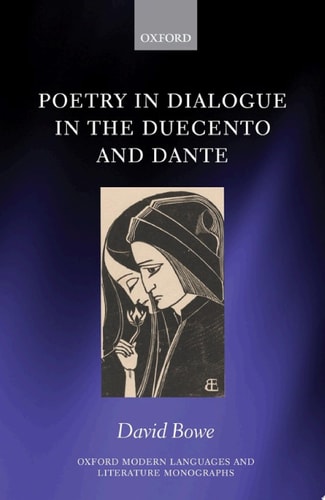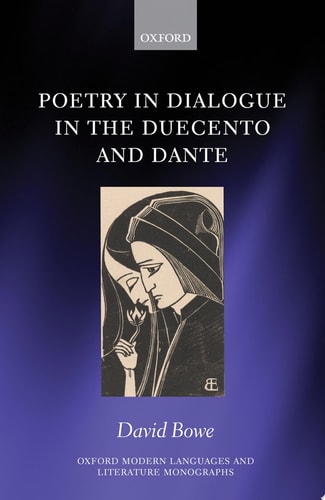
Poetry in Dialogue in the Duecento and Dante
0
0
As an Amazon Associate and affiliate partner, Menrva Books earns from qualifying purchases. Learn more
Author Description
Poetry In Dialogue In The Duecento And Dante Provides A New Perspective On The Highly Networked Literary Landscape Of Thirteenth- And Fourteenth-century Italy. It Demonstrates The Fundamental Role Of Dialogue Between And Within Texts In The Works Of Four Poets Who Represent Some Of The Major Developments In Early Italian Literature: Guittone D'arezzo, Guido Guinizzelli, Guido Cavalcanti, And Dante. Rather Than Reading The Cultural Landscape Through He Lens Of Dante's Works, Significant Though They May Be, The First Part Of This Study Reconstructs The Rich Network Of Literary, Especially Poetic Dialogue That Was At The Heart Of Medieval Writing In Italy. The Second Part Uses This Reconstruction To Demonstrate Dante's Engagement With, And Indebtedness To, The Dynamics Of Exchange That Characterised The Practice Of Medieval Italian Poets. The Overall Argument-for The Centrality Of Dialogic Processes To The Emerging Italian Literary Tradition-is Underpinned By A Conceptualisation Of Dialogue In Relation To Medieval And Modern Literary Theory And Philosophy Of Language. By Triangulating Between Brunetto Latini's Rettorica, Mikhail Bakhtin's 'dialogism', And As Sense Of 'performative' Speech Adapted From J. L. Austin, Poetry In Dialogue Shows The Openness Of Its Corpus To New Dialogues And Interpretations, Highlighting The Instabilities Of Even The Most Apparently Fixed, Monumental Texts. The Duecento. Guittone D'arezzo: Dialogic Conversion; Guido Guinizzelli: Dialogic Reorientation; Guido Cavalcanti: Dialogic Subjectivity -- Dante. Dante In Dialogue; Ars Legendi, Ars Poetica: The Siren And The Poet; Conclusion: Subjectivity, Dialogue, Openness David Bowe. Includes Bibliographical References And Index.
Menrva's Summary
THE THESIS
This study investigates how dialogic processes served as the foundational mechanism for the development of the Italian literary tradition during the thirteenth and fourteenth centuries. David Bowe, a scholar of medieval Italian literature, utilizes a framework that synthesizes medieval rhetorical treatises with modern theories of language. By analyzing the works of Guittone d'Arezzo, Guido Guinizzelli, Guido Cavalcanti, and Dante, the author argues that these poets operated within a highly interconnected network where text-based exchange was essential to their creative output.
THE SCOPE MAP
What You Will Find
- A reconstruction of the literary networks of the Duecento period.
- A comparative analysis of four major Italian poets and their intertextual engagements.
- A theoretical application of Bakhtinian dialogism and Austinian performative speech to medieval texts.
- A detailed examination of Dante's specific indebtedness to his predecessors.
Scope Limits
- The study does not provide a comprehensive history of all Italian literature of the period.
- It does not focus on the political or social history of the Duecento outside of its direct impact on poetic dialogue.
THE AUTHORITY PERSPECTIVE
Scholars in the field of medieval Italian studies recognize this work as a rigorous contribution to the understanding of intertextuality in early vernacular poetry. Readers frequently note the academic density of the prose, which requires a foundational knowledge of both medieval rhetoric and modern literary theory to fully appreciate.
Page Count:
0
Publication Date:
1900-01-01
Publisher:
Oxford University Press
ISBN-10:
0191883662
ISBN-13:
9780191883668
Poetry
Civilisation
Italian poetry
Literary Criticism
Italian
Literature History
Community Tags
Similar Books