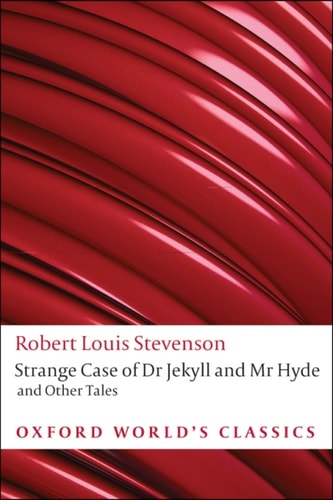
Strange Case of Dr Jekyll and Mr Hyde and Other Tales
0
0
As an Amazon Associate and affiliate partner, Menrva Books earns from qualifying purchases. Learn more
Author Description
This Dark Psychological Fantasy Is More Than A Moral Tale. It Is Also A Product Of Its Time, Drawing On Contemporary Theories Of Class, Evolution And Criminality And The Secret Lives Behind Victorian Propriety, To Create A Unique Form Of Urban Gothic.
Menrva's Summary
THE PULSE
A respected physician discovers a chemical means to separate his dual nature, inadvertently unleashing a violent alter ego that threatens to consume his existence. Dr. Henry Jekyll seeks to isolate the darker impulses of the human psyche, but his experiment results in the emergence of Edward Hyde, a man devoid of conscience. As Hyde’s influence grows, Jekyll struggles to maintain control over his own body and reputation within the rigid social structures of Victorian London. The narrative utilizes a multi-perspective framework, primarily through the observations of Mr. Utterson, a lawyer attempting to decipher the connection between his friend and the mysterious criminal. The story operates under the logical constraints of 19th-century scientific curiosity and the severe moral expectations of the era.
INSIDE THE PAGES
- Epistolary elements including letters and a final confession
- Dualistic character archetypes
- Urban Gothic atmosphere
- Third-person limited perspective shifting to first-person testimony
- Exploration of Victorian social hypocrisy
- Themes of addiction and moral decay
- Symbolic use of physical transformation
- Pacing focused on mystery and psychological tension
THE COLLECTIVE ECHO
Readers frequently highlight the novella as a foundational text in the study of human duality and the subconscious. Discussion often centers on the effectiveness of the atmospheric setting, which mirrors the internal fragmentation of the protagonist. Critics observe that the pacing remains tight, prioritizing the slow unraveling of the mystery over prolonged action sequences. The work is widely analyzed for its commentary on the repression inherent in Victorian society and the consequences of unchecked scientific ambition. Many readers find the shift in narrative perspective toward the end to be a significant factor in the story's enduring impact.
Page Count:
205
Publication Date:
1900-01-01
ISBN-10:
0191920541
ISBN-13:
9780191920547
Horror
Gothic
classic
Psychological
Victorian
Short Stories