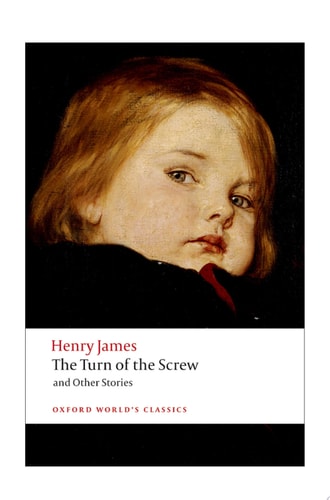
The Turn of the Screw and Other Stories
0
0
As an Amazon Associate and affiliate partner, Menrva Books earns from qualifying purchases. Learn more
Author Description
A young, inexperienced governess is charged with the care of Miles and Flora, two small children abandoned by their uncle at his grand country house. She sees the figure of an unknown man on the tower and his face at the window. It is Peter Quint, the master's dissolute valet, and he has come for little Miles. But Peter Quint is dead. Like the other tales collected here - `Sir Edmund Orme', `Owen Wingrave', and `The Friends of the Friends' - `The Turn of the Screw' is to all immediate appearances a ghost story. But are the appearances what they seem? Is what appears to the governess a ghost or a hallucination? Who else sees what she sees? The reader may wonder whether the children are victims of corruption from beyond the grave, or victims of the governess's `infernal imagination', which torments but also entrals her? `The Turn of the Screw' is probably the most famous, certainly the most eerily equivocal, of all ghostly tales. Is it a subtle, self-conscious exploration of the haunted house of Victorian culture, filled with echoes of sexual and social unease? Or is it simply, `the most hopelessly evil story that we have ever read'? The texts are those of the New York Edition, with a new Introduction and Notes. ABOUT THE SERIES: For over 100 years Oxford World's Classics has made available the widest range of literature from around the globe. Each affordable volume reflects Oxford's commitment to scholarship, providing the most accurate text plus a wealth of other valuable features, including expert introductions by leading authorities, helpful notes to clarify the text, up-to-date bibliographies for further study, and much more.
Menrva's Summary
THE PULSE
A governess arrives at a remote country estate to care for two children, only to become convinced that the grounds are haunted by malevolent spirits. Tasked with the upbringing of Miles and Flora, the protagonist finds her objective of protection complicated by sightings of figures who appear to be deceased former employees. The narrative framework relies on the governess's subjective perspective, creating a persistent ambiguity regarding whether the threats are supernatural entities or manifestations of her own psychological instability. She must navigate the social constraints of her position while attempting to shield her charges from perceived corruption.
INSIDE THE PAGES
- Unreliable first-person narration
- Gothic atmosphere and setting
- Ambiguous supernatural elements
- Psychological tension and character isolation
- Exploration of Victorian social norms
- Thematic focus on innocence and corruption
- Epistolary framing devices
- Precise, complex prose style
THE COLLECTIVE ECHO
Discussion often centers on the persistent ambiguity of the narrative, which forces readers to choose between a literal ghost story and a psychological study of repression. Readers frequently highlight the effectiveness of the prose in building unease without relying on overt violence or traditional horror tropes. Critics often examine how the text reflects Victorian anxieties regarding class, sexuality, and the vulnerability of children. The collection is widely regarded as a foundational work for understanding the evolution of the psychological thriller genre. Many readers find the open-ended nature of the conclusion to be the most compelling aspect of the experience.
Page Count:
328
Publication Date:
2008-01-01
Publisher:
OUP Oxford
ISBN-10:
0192669214
ISBN-13:
9780192669216
Horror
Psychological Thriller
English & College Success
English
classic
Short Stories
Victorian
Gothic
Community Tags
Other Editions(4)


Similar Books


Reader Comments
Share Your Thoughts
No comments yet. Be the first to share your thoughts!