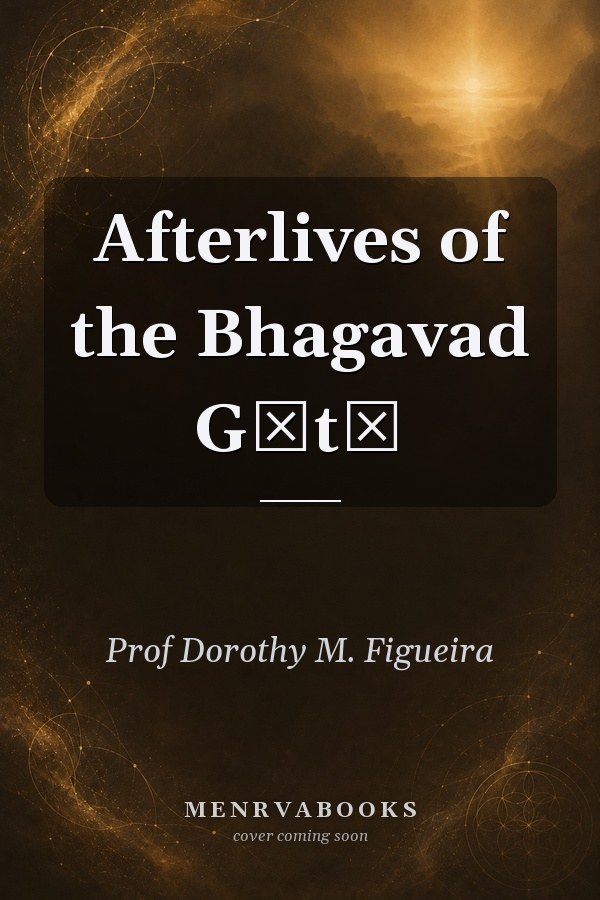
Afterlives of the Bhagavad Gītā
0
0
As an Amazon Associate and affiliate partner, Menrva Books earns from qualifying purchases. Learn more
Author Description
This Volume Stems From The Understanding That Historiographical Analyses Of The Gītā's Reception Overlook The Element Of Its Translation. It Posits Translation As Fundamental To Any Understanding Of The Gītā's Reception. It Examines In Depth And Comparatively How Translations Of The Gītā Do Not Seek The Same Aims In All Places And At All Times And Recognizes That Translation Theories And Methodologies Are Not Uniform Across Nations And Eras. In Translation Practice, There Is Often Consistency With Fixed Equivalents In The Guest Language That Allows One To Build On Philological Analysis And Textual Specificity. But There Is Also The Translation's Intent (dynamic Equivalence) To Give The Appearance Of Modern Relevance. Our Analysis Grapples With Issues Of Translational Non-neutrality, Distortion, And The Afterlife Of Distortion In The Text's Subsequent Shadow Book. In Particular, This Volume Looks At Insolites (unusual, Strange) Readings Of The Gītā And How They Seek To Fill The Hermeneutical Gap Between Readings Tied To Its Canonical And Scriptural Status And Those Readings Distant From The Text's Tradition. Translation And Its Reception Or Rejection Here Become Metaphors For The General Problems Involved In Cross-cultural Understanding, A Timely Topic In Literary Studies Today Where Both Theory And Pedagogy Seek To Engage The Other In Responsive And Responsible Ways. This Volume Looks At Translation Within This Larger Context, Not Merely As Linguistic Errors In The Act Of Translation, But As Indicative Of Conceptual, Cultural, And Ethical Dimensions-- Provided By Publisher.
Menrva's Summary
THE THESIS
This volume investigates how the act of translation serves as a fundamental, non-neutral force in shaping the global reception and cultural afterlife of the Bhagavad Gītā. Prof. Dorothy M. Figueira, a scholar in comparative literature, utilizes a comparative framework to argue that translations are not merely linguistic transfers but are deeply influenced by the specific aims, cultural contexts, and ethical intentions of the translator. By analyzing how different eras and nations approach the text, the author demonstrates that translation acts as a bridge—and sometimes a barrier—to cross-cultural understanding.
THE SCOPE MAP
What You Will Find
- Comparative analysis of diverse translations of the Bhagavad Gītā across various historical periods and national contexts.
- Examination of the tension between philological accuracy and the pursuit of dynamic equivalence for modern relevance.
- Exploration of 'insolites' or unusual readings that bridge the gap between canonical tradition and external interpretation.
Scope Limits
- The text does not provide a comprehensive history of every existing translation of the Gītā.
- It does not function as a theological commentary on the original Sanskrit text itself.
THE AUTHORITY PERSPECTIVE
Scholars in the field of translation studies and religious history recognize this work as a significant contribution to understanding the hermeneutical challenges of cross-cultural text transmission. Readers frequently note the academic density of the prose, which is tailored for those engaged in literary theory and comparative religious studies.
Page Count:
0
Publication Date:
2023-01-01
Publisher:
New York : Oxford University Press,
ISBN-10:
019198647X
ISBN-13:
9780191986475
Religion
Philosophy
Hinduism
Literary Criticism
Translations
Translation Studies
Community Tags
Similar Books