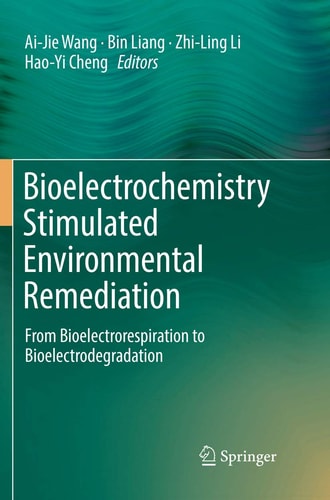
Bioelectrochemistry Stimulated Environmental Remediation: From Bioelectrorespiration to Bioelectrodegradation
0
0
As an Amazon Associate and affiliate partner, Menrva Books earns from qualifying purchases. Learn more
Author Description
This book reviews the latest advances in the bioelectrochemical degradation of recalcitrant environmental contaminants. The first part introduces readers to the basic principles and methodologies of bioelectrochemical systems, electron-respiring microorganisms, the electron transfer mechanism and functional electrode materials. In turn, the second part addresses the bioelectrochemical remediation/treatment of various environmental pollutants (including highly toxic refractory organics, heavy metals, and nitrates) in wastewater, sediment and wetlands. Reactor configuration optimization, hybrid technology amplification and enhanced removal principles and techniques are also discussed. The book offers a valuable resource for all researchers and professionals working in environmental science and engineering, bioelectrochemistry, environmental microbiology and biotechnology.
Menrva's Summary
THE THESIS
This book investigates the application of bioelectrochemical systems for the degradation of persistent environmental pollutants. It details the fundamental principles of bioelectrochemical systems, including the role of electron-respiring microorganisms, electron transfer mechanisms, and the selection of functional electrode materials. The work then explores the practical application of these systems in treating various contaminants such as toxic organic compounds, heavy metals, and nitrates found in wastewater, sediments, and wetlands. Furthermore, it discusses strategies for optimizing reactor configurations, integrating hybrid technologies, and enhancing pollutant removal efficiency.
THE SCOPE MAP
- Principles and methodologies of bioelectrochemical systems
- Role of electron-respiring microorganisms
- Mechanisms of electron transfer
- Functional electrode materials
- Bioelectrochemical remediation of refractory organic pollutants
- Treatment of heavy metals using bioelectrochemical methods
- Nitrate removal in wastewater, sediment, and wetlands
- Optimization of reactor configurations and hybrid technologies
THE AUTHORITY PERSPECTIVE
This book is presented as a comprehensive review of recent advancements in bioelectrochemical degradation of environmental contaminants. The structure divides the content into foundational principles and applied remediation techniques, suggesting a thorough approach for professionals in the field. The inclusion of reactor optimization and hybrid technologies indicates a focus on practical engineering solutions. The target audience is clearly defined as researchers and professionals in environmental science, bioelectrochemistry, environmental microbiology, and biotechnology.
Page Count:
300
Publication Date:
2018-12-29
Publisher:
Springer Nature Singapore
ISBN-10:
981134180X
ISBN-13:
9789811341809
Science
Non-Fiction
Biotechnology
Microbiology
Pollution Control
Electrochemistry
Community Tags
Similar Books