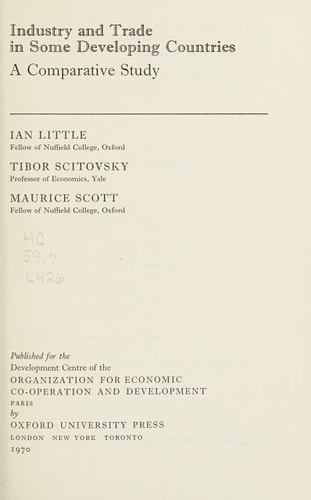
Industry and Trade in Some Developing Countries
0
0
As an Amazon Associate and affiliate partner, Menrva Books earns from qualifying purchases. Learn more
Author Description
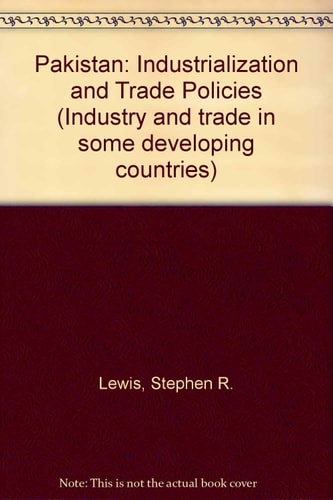
In this country, and especially since the second world war, industraialization in developing countries has typically ment import substitution. Industries have been set up to produce goods that were previously imported, and these goods have mainly been sold in the home market. Governments have ensured the profitability of these industries by protecting them against competing imports through tariffs and controls.
Menrva's Summary
THE THESIS
This work investigates the economic consequences and long-term viability of import substitution industrialization strategies in developing nations. I.M.D. Little, a prominent development economist, utilizes comparative empirical data from several nations to evaluate how government-mandated protectionism and trade controls influenced domestic industrial growth. The text argues that while these policies were intended to foster self-sufficiency, they frequently resulted in inefficiencies and distorted market incentives that hindered broader economic development.
THE SCOPE MAP
What You Will Find
- Comparative analysis of industrialization policies across multiple developing economies.
- Examination of tariff structures and import control mechanisms.
- Assessment of domestic market performance versus international trade competitiveness.
Scope Limits
- The analysis focuses primarily on post-World War II economic policies and does not cover contemporary digital-era trade dynamics.
- The study does not provide a comprehensive global survey, focusing instead on specific case studies relevant to the mid-20th century.
THE AUTHORITY PERSPECTIVE
Economists and historians frequently cite this text as a foundational critique of mid-century protectionist trade policies. Readers often note the academic density of the prose, which assumes a baseline understanding of macroeconomic principles.
Page Count:
534
Publication Date:
1970-01-01
Publisher:
Oxford University Press
ISBN-10:
0192153293
ISBN-13:
9780192153296
Economics
Underdeveloped areas -- Industries
Industrial Policy
Underdeveloped areas -- Economic policy
International Trade
Economic History
Underdeveloped areas -- Commerce
Community Tags
Similar Books