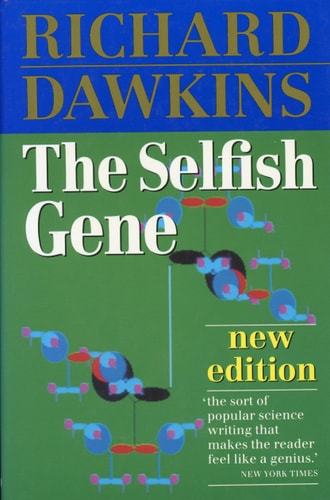
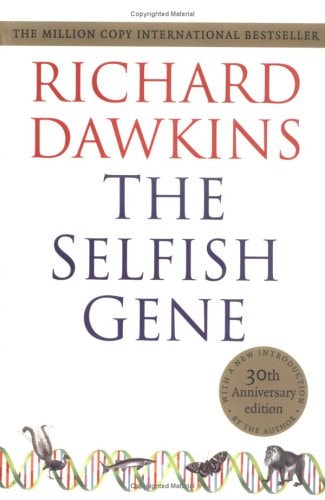
The Selfish Gene
0
0
As an Amazon Associate and affiliate partner, Menrva Books earns from qualifying purchases. Learn more
Author Description
This is a new edition of possibly the most exciting and innovative book on evolution in years. An international bestseller, Dawkins's superb reworking of the theory of natural selection has the rare distinction of having provoked as much interest outside the scientific community as within it. Fascinating, convincing, and beautiful in the simplicity with which complex ideas are expressed, The Selfish Gene is a classic.The revised, expanded edition contains two important new chapters. "Nice Guys Finish First" shows how cooperation can evolve even in a basically selfish world, and "The Long Reach of the Gene" advances the startling view that genes may reach outside the bodies in which they sit to manipulate other individuals--and even the world at large. The book concludes with completely new endnotes in which Dawkins replies to previous critics, or elaborates on points in the original text.Written in characteristically lively and accessible style, this new edition confirms Dawkins's reputation as one of the most brilliant biologists of his generation.
Menrva's Summary
THE THESIS
The Selfish Gene investigates the core question of whether evolution is best understood through the lens of individual organisms or the fundamental units of heredity. Richard Dawkins, a prominent evolutionary biologist, utilizes the framework of gene-centered selection to argue that genes, rather than species or individuals, are the primary units of natural selection. By shifting the focus from the survival of the organism to the replication of the gene, he provides a logical basis for understanding altruism, cooperation, and complex social behaviors in the natural world.
THE SCOPE MAP
What You Will Find
- The gene-centered view of evolution and natural selection
- Explanations for altruistic behavior through kin selection
- Game theory applications like the Prisoner's Dilemma in biological contexts
- The concept of the 'extended phenotype' and its influence on the environment
Scope Limits
- Does not provide a comprehensive history of all evolutionary thought
- Does not focus on the mechanics of molecular genetics or laboratory techniques
THE AUTHORITY PERSPECTIVE
Experts and readers alike recognize this work as a foundational text that successfully bridged the gap between academic evolutionary biology and the general public. While some scholars debate the limitations of gene-centered selection, the book remains a standard reference for understanding modern evolutionary theory and its implications for behavioral biology.
Page Count:
372
Publication Date:
1989-11-23
Publisher:
Oxford University Press
ISBN-10:
0192177737
ISBN-13:
9780192177735
Science
Non-Fiction
Biology
Genetics
Evolution
Sociobiology
Evolutionary Biology
Community Tags
Other Editions(9)


Similar Books











Reader Comments
Share Your Thoughts
No comments yet. Be the first to share your thoughts!