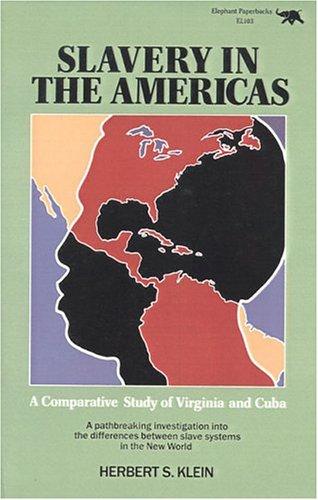
Slavery in the Americas
0
0
As an Amazon Associate and affiliate partner, Menrva Books earns from qualifying purchases. Learn more
Author Description
In this first detailed comparison of the workings and effects of slavery in two New World colonies, Herbert Klein dramatically confirms formerly untested theories about institutional differences in Latin American and North American slavery. He explains in large measure why blacks have achieved greater social integration and occupational mobility in Latin America than they have in the North. Similar in their racial proportions and in their plantation agriculture, Cuba and Virginia make excellent comparative models. Mr. Klein's pathbreaking analysis considers legal structures, religion, economic development, and the position of freedmen. His conclusions provide essential background for understanding some of the complexities of contemporary race relations.
Menrva's Summary
THE THESIS
This work investigates the institutional and social disparities between slavery in Latin America and North America to explain divergent patterns of racial integration and mobility. Herbert S. Klein, a prominent historian specializing in the comparative study of slavery, utilizes a rigorous comparative framework to analyze the historical development of colonial systems. By examining the structural differences between Cuba and Virginia, the author argues that legal, religious, and economic frameworks significantly influenced the long-term social status of enslaved populations and freedmen.
THE SCOPE MAP
What You Will Find
- Comparative analysis of colonial legal and religious structures in Cuba and Virginia
- Examination of plantation agriculture and economic development models
- Assessment of the social and occupational mobility of freedmen in the Americas
Scope Limits
- The analysis is restricted to the specific comparison of Cuba and Virginia as representative models
- The study does not provide an exhaustive survey of all colonial territories in the Western Hemisphere
THE AUTHORITY PERSPECTIVE
Historians and sociologists frequently cite this text as a foundational comparative study for understanding the institutional variations of New World slavery. Scholars note the clarity of the author's methodology in isolating specific variables to explain complex historical outcomes.
Page Count:
282
Publication Date:
1967-01-01
Publisher:
University of Chicago Press
ISBN-10:
0192181637
ISBN-13:
9780192181633
History
Race Relations
American History
Slavery
United States
Sociology