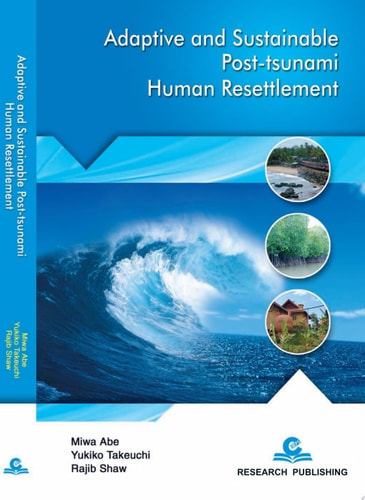
Adaptive and Sustainable Post-tsunami Human Resettlement
0
0
As an Amazon Associate and affiliate partner, Menrva Books earns from qualifying purchases. Learn more
Author Description
Post disaster recovery is an important issue, which is often ignored. For a large scale disaster, the humanitarian needs often dominate over other needs like environmental social or economic issues. Many of the decisions are taken hastily, and without proper survey and consultation. Time is also a critical issue, where the speedy recovery and quality of recovery process often clashes. Post disaster relocation is not a desirable option, but due to unavoidable circumstances (like enhancement of new regulation like coastal buffer zone, or destruction of infrastructure and/or ecosystem), it sometimes become inevitable to make the relocation decision. The key to relocation is its sustainability, which is how to ensure that the relocated people stay in the same place for longer time. Local people s livelihoods and attachment to the original place often becomes a major obstacle to the sustainability of relocation programs. Although this is a hard decision, when taken, the key point is how to implement a sustainable and adaptive resettlement/relocation program. This is the key topic of this book. Citing the examples from the 2004 Indian Ocean Tsunami, the book provides in-depth analysis with specific examples on how to ensure sustainable and adaptive resettlement. Human resettlement is specifically emphasized to highlight the people and community oriented approaches and needs. The book consists of seven chapters. The Chapter 1 outlines the problems and approaches, while Chapter 2 provides an analysis mainly from the literature review, and identifies the key problems and potentials of relocation programs. The chapter identifies a few political, social, economic and cultural factors. In Chapter 3, the book describes the experiences of Sri Lanka in three relocated villages. Comparing the conditions of before and after the relocation, the chapter identifies the common issues in three villages. Chapter 4 does the same analysis in the Tamil Nadu state of India. Comparing the cond
Menrva's Summary
THE THESIS
This book investigates the critical challenges and sustainable strategies for human resettlement in the aftermath of large-scale disasters, specifically focusing on post-tsunami recovery. It addresses the common tendency for hasty, ill-considered decisions in disaster recovery, where immediate humanitarian needs overshadow long-term environmental, social, and economic considerations. The work highlights the inherent conflict between the urgency of recovery and the quality of the process, particularly when relocation becomes unavoidable due to factors like new regulations or environmental destruction. The core of the book lies in defining and ensuring the sustainability of resettlement programs, acknowledging that local livelihoods and deep-rooted attachments to original locations present significant obstacles.
THE SCOPE MAP
- Analysis of post-disaster recovery challenges, emphasizing overlooked environmental, social, and economic issues.
- Literature review identifying key problems and potentials in relocation programs.
- Examination of political, social, economic, and cultural factors influencing resettlement.
- Case studies from Sri Lanka detailing experiences in three relocated villages post-tsunami.
- Comparative analysis of conditions before and after relocation in Sri Lankan villages.
- In-depth analysis of resettlement experiences in Tamil Nadu, India, following the 2004 tsunami.
- Focus on people and community-oriented approaches to human resettlement.
- Strategies for ensuring sustainable and adaptive resettlement and relocation programs.
THE AUTHORITY PERSPECTIVE
The book offers a detailed examination of post-disaster resettlement, drawing on the significant impact of the 2004 Indian Ocean Tsunami. It prioritizes a people-centered approach, analyzing the complexities of ensuring long-term sustainability in relocation efforts. The work is structured to first outline problems and approaches, then delve into a literature review, and finally present specific case studies from Sri Lanka and India. The analysis aims to identify common issues and provide insights into implementing adaptive and sustainable resettlement programs.
Page Count:
209
Publication Date:
2011-01-01
Publisher:
Research Publishing Service
ISBN-10:
9810877250
ISBN-13:
9789810877255
History
Economics
Non-Fiction
urban planning
Disaster Recovery
Sociology
Community Tags
Similar Books