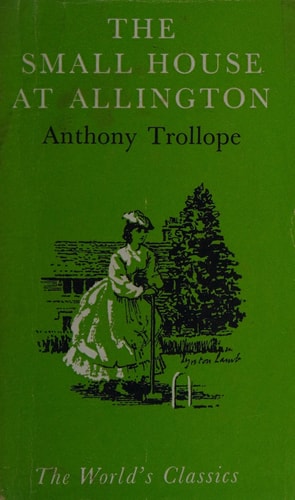
The Small House at Allington
0
0
As an Amazon Associate and affiliate partner, Menrva Books earns from qualifying purchases. Learn more
Author Description
The Small House at Allington introduces Trollope's most charming heroine, the betwitching Lily Dale, onto the Barsetshire scene. She so endeared herself to readers of the Cornhill Magazine, where A Small House was first published in serial form, that Trollope was bombarded by letters begging him to marry her to her lifelong adorer Johnny Eames. Lily is the niece of Squire Dale, an embittered old bachelor entrenched in the "Great House" at Allington. His sister-in-law lives at the adjacent "Small House" with her two daughters Lily and Bell, and the action centers on the relations between the two houses and on the romantic entanglements of the two girls. We also meet Sir Raffle Buffle, the bullying head of a government department, the heartless Lady Dumbello, and the shallow Adolphus Crosbie, who gets his just deserts in the form of the frigid Lady Alexandrina de Courcy. Trollope's characteristic theme of the invasion of a pastoral, conservative world by brash and progressive forces from London gives him an opportunity in this novel for vivid, contrasting descriptions of gracious country living, with croquet and tea on the lawn, and of the cut and thrust of London life in the 1860s.
Menrva's Summary
THE PULSE
The arrival of a sophisticated London suitor at the quiet village of Allington disrupts the tranquil lives of the Dale family and initiates a series of romantic betrayals. Lily Dale, the central figure, finds her expectations of marriage challenged by the arrival of Adolphus Crosbie, whose social ambitions threaten the stability of her household. The narrative follows the interactions between the inhabitants of the Great House and the Small House, exploring the tension between rural tradition and urban opportunism. Trollope employs a third-person omniscient perspective to examine the social hierarchies and moral dilemmas faced by the characters in 1860s England.
INSIDE THE PAGES
- Exploration of class dynamics within rural English society
- Contrast between pastoral country life and the competitive atmosphere of London
- Character-driven focus on courtship and social expectation
- Satirical portrayal of government bureaucracy and social climbers
- Examination of the consequences of vanity and broken promises
- Detailed depiction of Victorian domestic routines and social rituals
- Use of irony to highlight the flaws of the landed gentry
- Interweaving of multiple romantic subplots across different social strata
THE COLLECTIVE ECHO
Readers frequently highlight the character of Lily Dale as one of the most compelling figures in the Barsetshire series due to her resilience and moral clarity. Discussion often centers on the effectiveness of Trollope's social commentary regarding the clash between traditional values and the encroaching influence of modern urban life. Critics often note the pacing of the novel, which balances quiet domestic scenes with the sharp, often humorous, critique of the London social scene. The work is widely regarded for its ability to capture the nuances of Victorian courtship and the social pressures that dictated personal choices during the period. Readers appreciate the author's ability to maintain a consistent tone while navigating the complex emotional lives of his characters.
Page Count:
862
Publication Date:
2005-01-01
Publisher:
Chatto & Windus
ISBN-10:
019250472X
ISBN-13:
9780192504722
Romance
Womens Fiction
Classic Literature
Domestic fiction
Social Satire
Domestic Life
Victorian
Community Tags
Other Editions(17)

BoD - Books on Demand
2023
Default edition
Creative Media Partners, LLC
2022

Independently Published
2021

Creative Media Partners, LLC
2019

CreateSpace Independent Publishing Platform
2018

CreateSpace Independent Publishing Platform
2018

CreateSpace Independent Publishing Platform
2017
Oxford University Press
2015
Random House Digital Inc.
2014
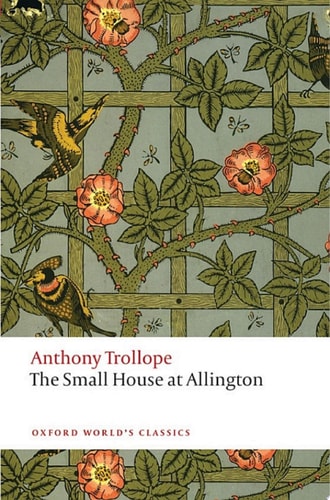
OUP Oxford
2014
Oup Oxford
2014

EBooksLib
2005
Chatto & Windus
2005

NuVision Publications
2004
Oxford University Press
2000
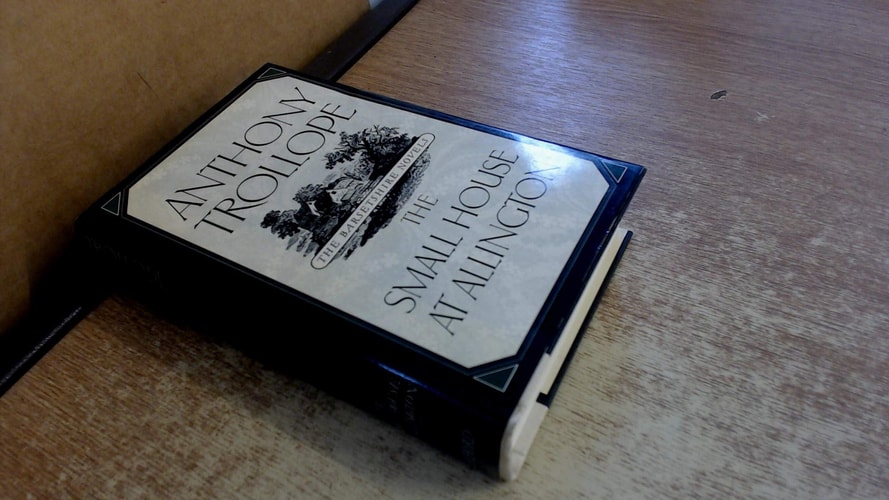
Oxford University Press
1989
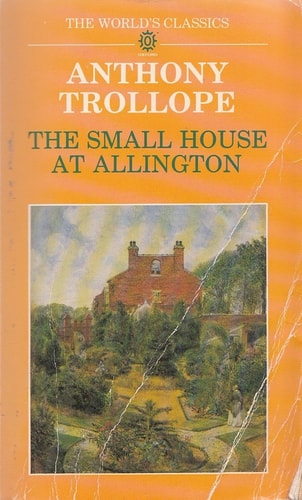
Oxford University Press
1981
Similar Books


Reader Comments
Share Your Thoughts
No comments yet. Be the first to share your thoughts!