Toleration and Understanding in Locke
0
0
As an Amazon Associate and affiliate partner, Menrva Books earns from qualifying purchases. Learn more
Author Description
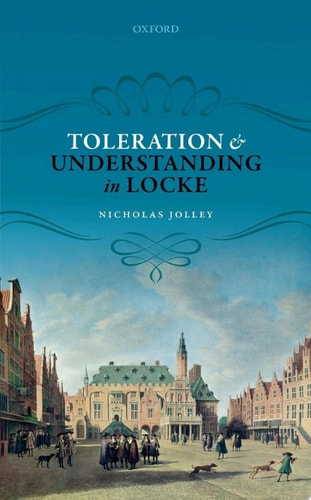
Despite recent advances in Locke scholarship, philosophers and political theorists have paid little attention to the relations among his three greatest works: An Essay Concerning Human Understanding, Two Treatises of Government, and Epistola de Tolerantia. As a result our picture of Locke's thought is a curiously fragmented one. Toleration and Understanding in Locke argues that these works are unified by a concern to promote the cause of religious toleration. Making extensive use of Locke's neglected replies to Proast, Nicholas Jolley shows how Locke draws on his epistemological principles to criticize religious persecution - for Locke, since revelation is an object of belief, not knowledge, coercion by the state in religious matters is not morally justified. In this volume Jolley also seeks to show how the Two Treatises of Government and the letters for toleration adopt the same contractualist approach to political theory; Locke argues for toleration from the function of the state where this is determined by the decisions of rational contracting parties. Throughout, attention is paid to demonstrating the range of Locke's arguments for toleration and to defending them, where possible, against recent criticisms. The book includes an account of the development of Locke's views about religious toleration from the beginning to the end of his career; it also includes discussions of his individualism about knowledge and belief, his critique of religious enthusiasm, his commitment to the minimal creed, and his teachings about natural law. Locke emerges as a rather systematic thinker whose arguments are highly relevant to modern debates about religious toleration.
Menrva's Summary
THE THESIS
This book investigates whether John Locke's major philosophical and political works form a unified project centered on the advocacy of religious toleration. Nicholas Jolley, a scholar of early modern philosophy, utilizes a close reading of Locke's primary texts, including his often-overlooked replies to Proast, to argue that Locke's epistemological framework directly informs his political stance against state-sponsored religious coercion. By synthesizing Locke's views on knowledge, belief, and the social contract, Jolley presents a cohesive interpretation of Locke as a systematic thinker whose arguments remain pertinent to contemporary political discourse.
THE SCOPE MAP
What You Will Find
- Analysis of the thematic connections between An Essay Concerning Human Understanding, Two Treatises of Government, and Epistola de Tolerantia
- Examination of Locke's contractualist approach to the function of the state
- Discussion of Locke's critique of religious enthusiasm and his commitment to a minimal creed
- Historical account of the development of Locke's views on toleration throughout his career
Scope Limits
- The text does not provide a comprehensive biography of Locke's life outside of his intellectual development
- It does not offer an exhaustive critique of every secondary source written on Locke's political philosophy
THE AUTHORITY PERSPECTIVE
Scholars and students of political philosophy frequently cite this work for its ability to bridge the gap between Locke's epistemology and his political theory. Readers often note the academic density of the prose, which is intended for those already familiar with the foundational texts of the seventeenth-century Enlightenment.
Page Count:
185
Publication Date:
2016-01-01
Publisher:
OUP Oxford
ISBN-10:
0192509438
ISBN-13:
9780192509437
Philosophy
Religious tolerance
Political Theory
History of Ideas
History & Surveys
Epistemology