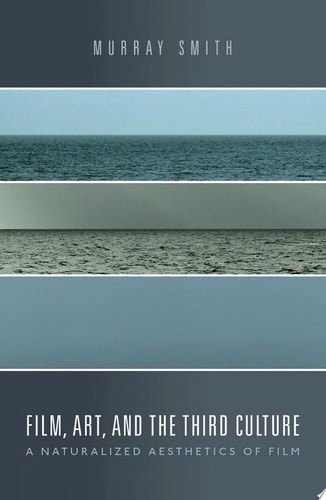
Film, Art, and the Third Culture
0
0
As an Amazon Associate and affiliate partner, Menrva Books earns from qualifying purchases. Learn more
Author Description
In The Mid-1950s C.p. Snow Began His Campaign Against The 'two Cultures' - The Debilitating Divide, As He Saw It, Between Traditional 'literary Intellectual' Culture, And The Culture Of The Sciences, Urging In Its Place A 'third Culture' Which Would Draw Upon And Integrate The Resources Of Disciplines Spanning The Natural And Social Sciences, The Arts And The Humanities. Murray Smith Argues That, With The Ever-increasing Influence Of Evolutionary Theory And Neuroscience, And The Pervasive Presence Of Digital Technologies, Snow's Challenge Is More Relevant Than Ever. Working Out How The 'scientific' And Everyday Images Of The World 'hang' Together Is No Simple Matter. In Film, Art, And The Third Culture, Smith Explores This Question In Relation To The Art, Technology, And Science Of Film In Particular, And To The World Of The Arts And Aesthetic Activity More Generally. In The First Part Of His Book, Smith Explores The General Strategies And Principles Necessary To Build A 'third Cultural' Or Naturalized Approach To Film And Art - One That Roots Itself In An Appreciation Of Scientific Knowledge And Method. Smith Then Goes On To Focus On The Role Of Emotion In Film And The Other Arts, As An Extended Experiment In The 'third Cultural' Integration Of Ideas On Emotion Spanning The Arts, Humanities And Sciences. While Acknowledging That Not All Of The Questions We Ask Are Scientific In Nature, Smith Contends That We Cannot Disregard The Insights Wrought By Taking A Naturalized Approach To The Aesthetics Of Film And The Other Arts.
Menrva's Summary
THE THESIS
Can the divide between the humanities and the sciences be bridged to create a unified understanding of aesthetic experience? Murray Smith, a professor of film studies, utilizes evolutionary theory, neuroscience, and digital technology to argue for a 'third culture' approach to film and art. He posits that aesthetic inquiry must integrate scientific methodology to fully comprehend how human beings perceive and respond to artistic works.
THE SCOPE MAP
What You Will Find
- Theoretical frameworks for naturalizing film aesthetics
- Analysis of the role of emotion in artistic engagement
- Integration of evolutionary psychology and neuroscience with film theory
- Examination of the intersection between digital technology and traditional art forms
Scope Limits
- Does not claim that all aesthetic questions are purely scientific
- Does not provide a comprehensive history of film theory
THE AUTHORITY PERSPECTIVE
Scholars and critics recognize this work as a significant contribution to the naturalization of film studies and aesthetics. Readers frequently note the academic density of the prose, which requires a foundational understanding of both film theory and cognitive science to fully grasp the author's arguments.
Page Count:
288
Publication Date:
2017-01-01
Publisher:
Oxford University Press
ISBN-10:
0192507923
ISBN-13:
9780192507921
Non-Fiction
Film Studies
Cultural Theory
Aesthetics
Philosophy of
Community Tags
Similar Books