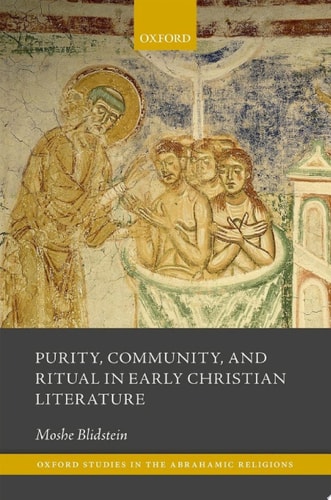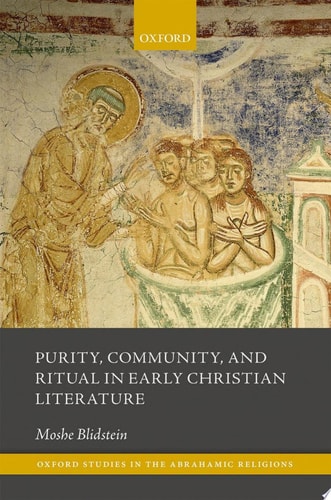
Purity, Community, and Ritual in Early Christian Literature
0
0
As an Amazon Associate and affiliate partner, Menrva Books earns from qualifying purchases. Learn more
Author Description
Purity, Community, And Ritual In Early Christian Literature Investigates The Meaning Of Purity, Purification, Defilement, And Disgust For Christian Writers, Readers, And Listeners From The First To Third Centuries. Anthropological And Sociological Works Over The Past Decades Have Demonstrated How Purity And Defilement Rituals, Practices, And Discourses Harness The Power Of A Raw Emotion In Order To Shape And Manipulate Cultural Structures. Moshe Blidstein Builds On Such Theories To Explain How Early Christian Writers Drew On Ancient Jewish And Greco-roman Traditions On Purity And Defilement, Using Them To Create New Types Of Community, Form Christian Identity, And Articulate The Relationship Between Body, Sin, And Ritual. Blidstein Discusses Early Christian Purity Issues Under Several Headings: Dietary Law, Death Defilement, Purity Of The Heart, Defilement Of Outsiders, And Purity Of The Community. Analysis Of The Motivations Shaping The Development Of Each Area Of Discourse Reveals Two Major Considerations: Polemical And Substantive. Thus, Christian Writing On Dietary Law And Death Defilement Is Essentially Polemical, Constructing Christian Identity By Marking The Purity Practices And Beliefs Of Others As False. Concerning The Subjects Of Baptism, Eucharist, And Penance, However, The Discourse Turns Inwards And Becomes More Substantive, Seeking To Create And Maintain Theories Of Ritual And Human Nature Coherent With The Theological Principles Of The New Religion.
Menrva's Summary
THE THESIS
This work investigates how early Christian writers utilized concepts of purity, defilement, and disgust to construct communal identity and define theological boundaries between the first and third centuries. Moshe Blidstein, a scholar of early Christian and Jewish history, synthesizes anthropological and sociological theories to analyze how these ancient traditions were adapted. By examining both polemical and substantive discourses, the author demonstrates how early Christians navigated their relationship with Jewish and Greco-Roman practices to establish a distinct religious framework.
THE SCOPE MAP
What You Will Find
- Analysis of purity discourse regarding dietary laws, death, and the heart.
- Examination of the role of ritual in shaping Christian identity and community.
- Comparative study of Jewish and Greco-Roman influences on early Christian thought.
- Investigation into the theological development of baptism, the Eucharist, and penance.
Scope Limits
- The study is strictly limited to the first through third centuries of the Christian era.
- The analysis focuses primarily on textual discourse rather than archaeological evidence of daily practice.
THE AUTHORITY PERSPECTIVE
Scholars recognize this text as a rigorous contribution to the study of early Christian identity formation and ritual theory. Readers frequently note the academic density of the prose, which makes it a specialized resource for historians and theologians interested in the intersection of sociology and early religious practice.
Page Count:
368
Publication Date:
2017-01-01
Publisher:
Oxford University Press
ISBN-10:
0192509764
ISBN-13:
9780192509765
Religion
History
Sociology of Religion
Early Christianity
Theology