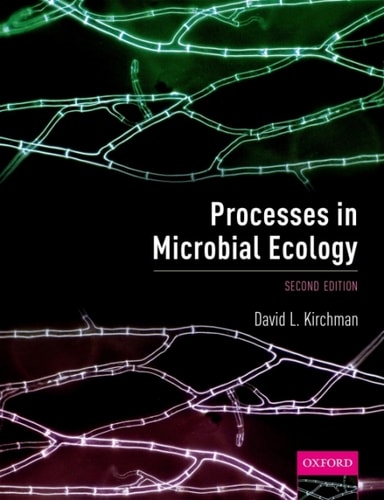
Processes in Microbial Ecology
0
0
As an Amazon Associate and affiliate partner, Menrva Books earns from qualifying purchases. Learn more
Author Description
Microbial ecology is the study of interactions among microbes in natural environments and their roles in biogeochemical cycles, food web dynamics, and the evolution of life. Microbes are the most numerous organisms in the biosphere and mediate many critical reactions in elemental cycles and biogeochemical reactions. Because they are essential players in the carbon cycle and related processes, microbial ecology is a vital science for understanding the role of the biosphere in global warming and the response of natural ecosystems to climate change. This second edition has been fully revised, restructured, and updated while remaining concise and accessible. It discusses the major processes carried out by viruses, bacteria, fungi, protozoa and other protists - the microbes - in freshwater, marine, and terrestrial ecosystems. The focus is on biogeochemical processes, starting with primary production and the initial fixation of carbon into cellular biomass, before exploring how that carbon is degraded in both oxygen-rich (oxic) and oxygen-deficient (anoxic) environments. These processes are in turn affected by ecological interactions, including competition for limiting nutrients, viral lysis, and predation by various protists in soils and aquatic habitats. The book neatly connects processes occurring at the micron scale to events happening at the global scale, including the carbon cycle and its connection to climate change issues. A final chapter is devoted to symbiosis and other relationships between microbes and larger organisms. Microbes have huge impacts not only on biogeochemical cycles, but also on the ecology and evolution of more complex forms of life, including humans.
Menrva's Summary
THE THESIS
This text investigates the fundamental role of microbial processes in driving global biogeochemical cycles and their subsequent impact on climate change. David L. Kirchman, a distinguished researcher in marine microbiology, utilizes current ecological data and metabolic frameworks to explain how microscopic organisms regulate the carbon cycle. The book argues that understanding these small-scale interactions is necessary to predict how natural ecosystems will respond to shifting environmental conditions.
THE SCOPE MAP
What You Will Find
- Analysis of carbon fixation and degradation in oxic and anoxic environments
- Examination of viral lysis, nutrient competition, and protist predation
- Integration of microbial activity across freshwater, marine, and terrestrial biomes
Scope Limits
- Does not provide an exhaustive taxonomic catalog of all known microbial species
- Focuses primarily on biogeochemical functions rather than clinical or pathogenic microbiology
THE AUTHORITY PERSPECTIVE
Experts recognize this volume as a foundational text for students and researchers seeking a synthesis of microbial ecology and global biogeochemical cycles. Readers frequently note the clarity of the prose, which effectively bridges the gap between microscopic metabolic processes and large-scale environmental phenomena.
Page Count:
336
Publication Date:
2018-01-01
Publisher:
OUP Oxford
ISBN-10:
0192506471
ISBN-13:
9780192506474
Science
Microbiology
Ecology
Biology
Community Tags
Other Editions(5)



Similar Books





Reader Comments
Share Your Thoughts
No comments yet. Be the first to share your thoughts!