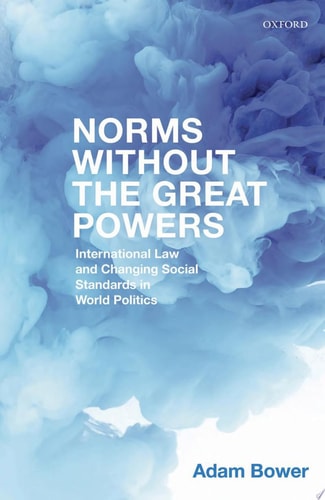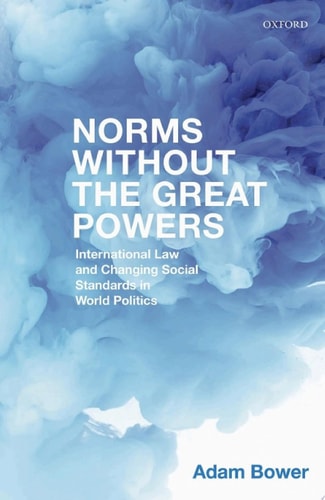
Norms Without the Great Powers: International Law and Changing Social Standards in World Politics
0
0
As an Amazon Associate and affiliate partner, Menrva Books earns from qualifying purchases. Learn more
Author Description
Can multilateral treaties succeed in transforming conduct when they are rejected by the most powerful states in the international system? In the past two decades, coalitions of middle-power states and transnational civil society groups have negotiated binding legal agreements in the face of concerted opposition from China, Russia, and most especially the United States. These instances of a so-called 'new diplomacy' reflect a deliberate attempt to use the language of international law to bypass great power objections in establishing new global standards. Yet critics have frequently derided such treaties as utopian and counter productive because they fail to include those states allegedly most capable of effectively managing complex international cooperation. Thus far no study has offered a systematic, comparative study of the promise, and limits, of multilateralism without the great powers. Norms Without the Great Powers addresses this gap through the presentation of a novel theoretical account and detailed empirical evidence regarding the implementation of two archetypal cases, the antipersonnel Mine Ban Treaty and International Criminal Court. Both treaties have substantially reshaped expectations and behaviour in their respective domains, but with important variation in the extent and breadth of their impact. These findings provide the impetus for assessing the prospects for similar strategies on other topics of contemporary global concern. This book offers a timely addition to the dynamic and growing literature on the practice and consequences of international governance and should appeal to academics, civil society experts, and foreign policy practitioners working in fields such as security, human rights, and the environment.
Menrva's Summary
THE THESIS
This book investigates whether multilateral treaties can effectively establish and enforce global norms when major powers actively oppose them. Adam Bower, a scholar of international relations, utilizes a comparative framework to analyze the efficacy of international legal instruments in the absence of great power participation. By examining the mechanisms of 'new diplomacy,' the author argues that coalitions of middle-power states and civil society organizations can successfully reshape international behavior through the strategic application of legal standards.
THE SCOPE MAP
What You Will Find
- A theoretical framework for understanding multilateralism without great power support
- Comparative analysis of the Mine Ban Treaty and the International Criminal Court
- Empirical evidence regarding the implementation and impact of these treaties
- Assessment of the limits of non-great power diplomacy
Scope Limits
- The study focuses primarily on the two specified archetypal cases rather than an exhaustive survey of all international treaties
- The analysis does not provide a comprehensive predictive model for every future area of global concern
THE AUTHORITY PERSPECTIVE
Experts recognize this work as a significant contribution to the study of international governance and the evolving nature of diplomatic practice. Readers frequently note the academic rigor and the clarity with which the author addresses the tension between legal idealism and geopolitical reality.
Page Count:
309
Publication Date:
2017-01-01
Publisher:
OUP Oxford
ISBN-10:
0192507176
ISBN-13:
9780192507174
Human rights
Diplomacy
International relations
International Law
Community Tags
Similar Books