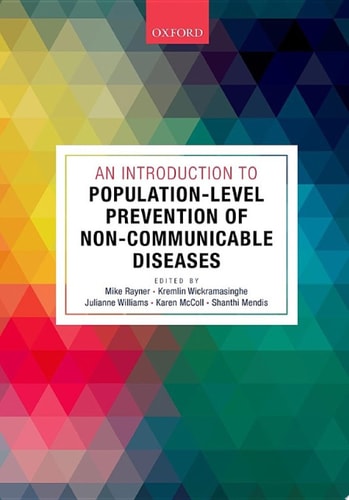
An Introduction to Population-Level Prevention of Non-Communicable Diseases
0
0
As an Amazon Associate and affiliate partner, Menrva Books earns from qualifying purchases. Learn more
Author Description
Non-communicable diseases (NCDs) kill more people than anything else in the world. They include cardiovascular diseases, such as heart attacks and strokes; cancers; chronic respiratory diseases, such as chronic obstructed pulmonary disease and asthma; and diabetes. In 2013, the World Health Organization published a global action plan for the prevention and control of NCDs which set a target to reduce death rates from NCDs by 25% by 2025. In response, countries have been drawing up national-level NCD prevention policies and programmes. New departments have been created by governments, NGOs, and other organizations to drive this agenda forward, creating a need for capacity building and training. In response to this need, the Nuffield Department of Population Health and the Department for Continuing Education at the University of Oxford initiated an accredited six-day short course on prevention strategies for non-communicable diseases with a population-based approach. In the past, many attempts to engage with NCD prevention have centred on individual-level interventions, such as screening and treating individual patients. In this new book, the course organisers provide a solid introduction to the population-based approach and bring together the concepts, evidence, and methods that define it. An Introduction to Population-Level Prevention of Non-Communicable Diseases takes readers through the entire policy cycle: from problem definition, solution generation, capacity building, and implementation to evaluation and monitoring. The book includes a wide range of case studies and practical examples of plans and projects that illustrate the real-life applications of theory. This book provides an unparalleled overview of population-based approaches to the prevention of non-communicable diseases, reflecting the latest research in the field. It is a key resource for anyone with an interest in NCD prevention, particularly early-career professionals working in governments, NGOs, h
Menrva's Summary
THE THESIS
How can governments and health organizations effectively implement population-level strategies to reduce the global burden of non-communicable diseases? The authors, affiliated with the University of Oxford, synthesize academic research and practical policy frameworks to address the shift from individual-level clinical interventions to systemic, population-based prevention models. This text serves as a structured guide for professionals tasked with navigating the entire policy cycle, from initial problem identification to long-term monitoring and evaluation.
THE SCOPE MAP
What You Will Find
- Comprehensive overview of the policy cycle including problem definition, solution generation, and implementation.
- Methodologies for capacity building within government and non-governmental organizations.
- Real-world case studies illustrating the application of population-based prevention theory.
Scope Limits
- Does not focus on individual-level clinical screening or patient-specific treatment protocols.
- Excludes detailed pharmacological or surgical intervention strategies.
THE AUTHORITY PERSPECTIVE
Experts recognize this text as a foundational resource for early-career public health professionals and policy makers. Readers frequently note the clarity of the framework, which successfully bridges the gap between theoretical public health research and practical administrative application.
Page Count:
435
Publication Date:
2017-01-01
Publisher:
OUP Oxford
ISBN-10:
0192508695
ISBN-13:
9780192508690
Health Policy
Epidemiology
Allied Health
Communicable Diseases
Medical
Public Health
Community Tags
Similar Books










Reader Comments
Share Your Thoughts
No comments yet. Be the first to share your thoughts!