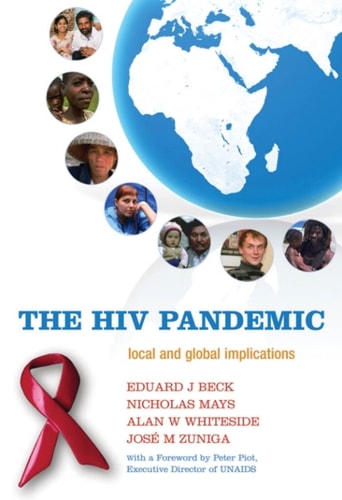
The HIV Pandemic: Local and Global Implications
0
0
As an Amazon Associate and affiliate partner, Menrva Books earns from qualifying purchases. Learn more
Author Description
As we approach the 25th anniversary of the first recognition of HIV/AIDS in 1981, this book reflects on the international impact of the disease. It has persistently remained a global issue, with more than 50 million people worldwide estimated to have been infected since that date. This ambitious book, written by 165 authors from 30 countries, offers a multi-country comparative study that examines how the response to the common, global threat of HIV is shaped by the history, culture, institutions and health systems of the individual countries affected. Increasingly the shift of health systems has been from prevention only as the main containment strategy, to a strategy that includes scaling up HIV treatment, and care and prevention services, including antiretroviral therapy. Thus, all parts of the health system must be involved; policy makers, healthcare professionals and users of the services have been forced to think differently about how services are financed, how resources are allocated, how systems are structured and organized, how services are delivered to patients, and how the resulting activity is monitored and evaluated in order to improve the effectiveness, efficiency, equity and acceptability of the response. This book is unique in attempting to describe and assess a range of responses across the globe by situating them within the characteristics of each country and its health system. Most chapters combine a health policy expert with an HIV specialist, allowing both a 'top down' health system approach and a 'bottom up' HIV-specific perspective. There are thematic and analytical sections, which provide an overview and some suggestions for solutions to the most serious outstanding issues, and chapters which analyse specific country and organisational responses. There is no perfect health system, but the evidence provided here allows the sharing of knowledge, and a opportunity to assess the impact and reactions, to an epidemic that must be considered a long term challenge.
Menrva's Summary
THE THESIS
This book investigates how diverse national health systems and cultural frameworks shape the global response to the HIV/AIDS pandemic. Author Peter Piot, a prominent figure in global health and former head of UNAIDS, compiles contributions from 165 international experts to analyze the transition from prevention-focused strategies to integrated treatment and care models. The text argues that effective pandemic management requires a synthesis of top-down policy analysis and bottom-up clinical expertise, tailored to the specific institutional realities of individual countries.
THE SCOPE MAP
What You Will Find
- Comparative analysis of HIV/AIDS responses across 30 countries.
- Frameworks for evaluating health system financing, resource allocation, and service delivery.
- Integration of health policy theory with clinical HIV specialization.
- Thematic sections addressing systemic challenges in monitoring and equity.
Scope Limits
- The text focuses primarily on the institutional and policy-based responses rather than the biological or virological mechanisms of the virus.
- It does not provide a comprehensive clinical manual for individual patient treatment.
THE AUTHORITY PERSPECTIVE
Experts recognize this work as a foundational comparative study for public health professionals and policy makers. Readers frequently note the academic density of the prose, which serves as a comprehensive reference for understanding the structural complexities of global health interventions.
Page Count:
840
Publication Date:
2008-01-01
Publisher:
Oxford University Press
ISBN-10:
0191574767
ISBN-13:
9780191574764
Public Health
Global Health
Epidemiology
Medical
Health Policy
Sociology
Allied Health
Community Tags
Similar Books