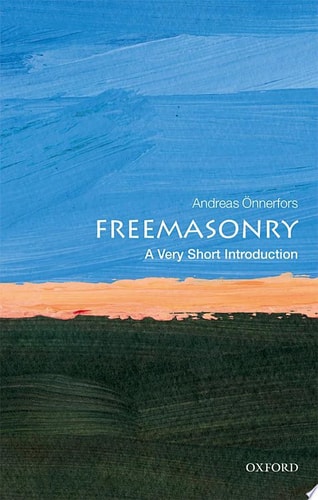
Freemasonry: A Very Short Introduction
0
0
As an Amazon Associate and affiliate partner, Menrva Books earns from qualifying purchases. Learn more
Author Description
Freemasonry is one of the oldest and most widespread voluntary organisations in the world. Over the course of three centuries men (and women) have organized themselves socially and voluntarily under its name. With a strong sense of liberation, moral enlightenment, cosmopolitan openness and forward-looking philanthropy, freemasonry has attracted some of the sharpest minds in history and has created a strong platform for nascent civil societies across the globe. With the secrecy of internally communicated knowledge, the clandestine character of organization, and the enactment of rituals and the elaborate use of symbols, freemasonry has also opened up feelings of distrust, as well as allegations of secretiveness and conspiracy. This Very Short Introduction introduces the inner activities of freemasonry, and the rituals, symbols and practices. Looking at the development of the organizational structure of masonry from the local to the global level, Andreas Önnerfors considers perceptions of freemasonry from the outside world, and navigates through the prevalent fictions and conspiracy theories. He also discusses how freemasonry has from its outset struggled with issues of exclusion based upon gender, race and religion, despite promoting tolerant openness and inclusion. Finally Önnerfors shines a light on the rarely discussed but highly compelling history of female agency in masonic and para-masonic orders. ABOUT THE SERIES: The Very Short Introductions series from Oxford University Press contains hundreds of titles in almost every subject area. These pocket-sized books are the perfect way to get ahead in a new subject quickly. Our expert authors combine facts, analysis, perspective, new ideas, and enthusiasm to make interesting and challenging topics highly readable.
Menrva's Summary
THE THESIS
This book investigates the historical development, organizational structure, and societal impact of Freemasonry while addressing the tension between its stated ideals and its reputation for secrecy. Andreas Önnerfors, a scholar specializing in the history of secret societies and Enlightenment culture, utilizes historical records and sociological analysis to examine how the organization has functioned as a platform for civil society while simultaneously fueling conspiracy theories. The text provides a balanced framework for understanding the internal rituals and external perceptions of the fraternity.
THE SCOPE MAP
What You Will Find
- Historical evolution of Freemasonry from the 18th century to the present
- Analysis of Masonic symbolism, ritual practices, and internal communication
- Examination of the role of female agency within Masonic and para-Masonic orders
- Discussion of exclusionary practices regarding gender, race, and religion
Scope Limits
- Does not provide an exhaustive list of all global Masonic lodges
- Does not serve as a comprehensive guide to specific local lodge membership requirements
THE AUTHORITY PERSPECTIVE
Readers frequently note the academic density of the prose, which manages to condense complex historical themes into a concise format. Experts highlight this as a foundational text for those seeking a neutral, evidence-based overview of the organization's history and its place in modern society.
Page Count:
160
Publication Date:
2017-01-01
Publisher:
OUP Oxford
ISBN-10:
0192516108
ISBN-13:
9780192516107
History
Non-Fiction
Religion
Freemasons
Essays
Sociology