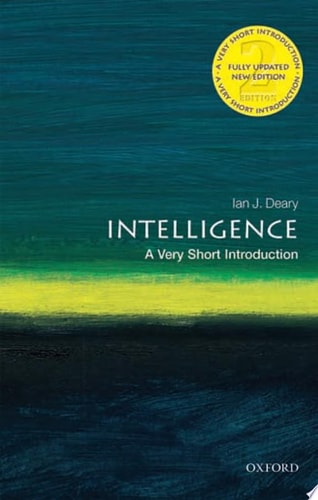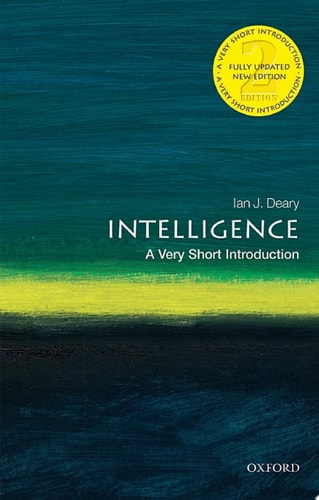
Intelligence: A Very Short Introduction
0
0
As an Amazon Associate and affiliate partner, Menrva Books earns from qualifying purchases. Learn more
Author Description
Some people are cleverer than others. This everyday observation is the subject of an academic field that is often portrayed as confused and controversial, when in fact, the field of intelligence holds some of psychology's best-replicated findings. This Very Short Introduction describes what psychologists have discovered about how and why people differ in their thinking powers. Drawing on large scale data Ian Deary considers how many types of intelligence there are, and how intelligence changes with age. Along the way he tackles some of the most burning questions surrounding intelligence, such as whether larger brains are cleverer, and how genes and environments contribute to people's intelligence differences. He also considers the new field of cognitive epidemiology, which draws links between intelligence and better health, less illness, and longer life, and asks whether intelligence is increasing. In this new edition Deary also addresses the controversial question of whether men and women differ in intelligence. Throughout he provides a clear description of the data we can use to answer these questions and more. ABOUT THE SERIES: The Very Short Introductions series from Oxford University Press contains hundreds of titles in almost every subject area. These pocket-sized books are the perfect way to get ahead in a new subject quickly. Our expert authors combine facts, analysis, perspective, new ideas, and enthusiasm to make interesting and challenging topics highly readable.
Menrva's Summary
THE THESIS
This book investigates the scientific consensus surrounding human intelligence, addressing the core question of why individuals differ in their cognitive abilities. Ian J. Deary, a professor of differential psychology, utilizes large-scale longitudinal data and psychometric research to explain the stability and variability of intelligence across the lifespan. He presents a framework that balances genetic influences with environmental factors while clarifying common misconceptions about the field.
THE SCOPE MAP
What You Will Find
- Analysis of psychometric testing and the structure of cognitive abilities
- Examination of the relationship between brain size and cognitive performance
- Overview of cognitive epidemiology and its links to health and longevity
- Discussion on the impact of gender and age on intelligence metrics
Scope Limits
- Does not provide a comprehensive history of intelligence testing beyond modern psychometrics
- Does not offer practical advice or training programs for increasing individual intelligence
THE AUTHORITY PERSPECTIVE
Experts recognize this text as a reliable, concise primer on the current state of differential psychology. Readers frequently note the academic density of the prose, which manages to distill complex statistical findings into an accessible format for students and interested laypeople.
Page Count:
184
Publication Date:
2020-01-01
Publisher:
OUP Oxford
ISBN-10:
0192515993
ISBN-13:
9780192515995
Non-Fiction
Psychology
Intelligence
Academic