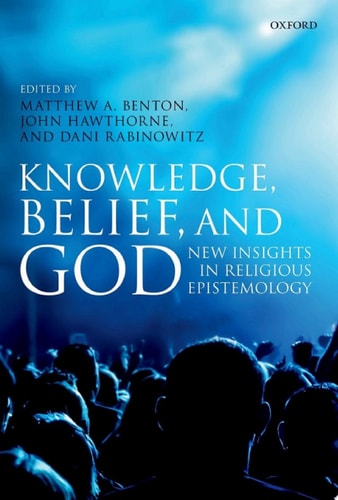
Knowledge, Belief, and God: New Insights in Religious Epistemology
0
0
As an Amazon Associate and affiliate partner, Menrva Books earns from qualifying purchases. Learn more
Author Description
Recent decades have seen a fertile period of theorizing within mainstream epistemology which has had a dramatic impact on how epistemology is done. Investigations into contextualist and pragmatic dimensions of knowledge suggest radically new ways of meeting skeptical challenges and of understanding the relation between the epistemological and practical environment. New insights from social epistemology and formal epistemology about defeat, testimony, a priority, probability, and the nature of evidence all have a potentially revolutionary effect on how we understand our epistemological place in the world. Religion is the place where such rethinking can potentially have its deepest impact and importance. Yet there has been surprisingly little infiltration of these new ideas into philosophy of religion and the epistemology of religious belief. Knowledge, Belief, and God incorporates these myriad new developments in mainstream epistemology, and extends these developments to questions and arguments in religious epistemology. The investigations proposed in this volume offer substantial new life, breadth, and sophistication to issues in the philosophy of religion and analytic theology. They pose original questions and shed new light on long-standing issues in religious epistemology; and these developments will in turn generate contributions to epistemology itself, since religious belief provides a vital testing ground for recent epistemological ideas.
Menrva's Summary
THE THESIS
This volume investigates how recent developments in mainstream epistemology can be applied to address long-standing questions and challenges within the philosophy of religious belief. The authors, including Dani Rabinowitz, John P. Hawthorne, and Matthew A. Benton, argue that the intersection of contemporary epistemological tools—such as contextualism, social epistemology, and formal probability—and religious inquiry remains under-explored. By integrating these modern frameworks, the text seeks to provide a more sophisticated analysis of religious knowledge, testimony, and the nature of evidence.
THE SCOPE MAP
What You Will Find
- Applications of contextualist and pragmatic epistemology to religious belief
- Analysis of social epistemology regarding testimony and religious authority
- Formal epistemological approaches to probability and evidence in theological contexts
- Re-evaluations of skeptical challenges through the lens of modern analytic philosophy
Scope Limits
- The text focuses primarily on analytic philosophical traditions and does not provide an exhaustive survey of continental or historical theological perspectives.
THE AUTHORITY PERSPECTIVE
Scholars and students of analytic theology frequently identify this work as a significant bridge between mainstream epistemology and religious philosophy. The text is noted for its high level of academic rigor and its utility in applying formal logic to traditional theological debates.
Page Count:
355
Publication Date:
2018-01-01
Publisher:
OUP Oxford
ISBN-10:
0192519603
ISBN-13:
9780192519603
Religion
Philosophy
Epistemology
Philosophy of
Analytic Theology
Religion
Knowledge Theory
Community Tags
Similar Books