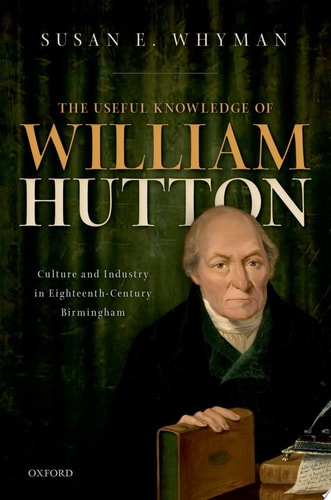
The Useful Knowledge of William Hutton
0
0
As an Amazon Associate and affiliate partner, Menrva Books earns from qualifying purchases. Learn more
Author Description
The Useful Knowledge Of William Hutton Shows The Rapid Rise Of A Self-taught Workman And The Growing Prominence Of The City Of Birmingham During The Two Major Events Of The Eighteenth-century - The Industrial Revolution And The Enlightenment. Hutton Achieved Wealth, Land, Status, And Literary Fame, But Later Became A Victim Of Violent Riots. The Book Boldly Claims That An Understanding Of The Industrial Revolution Requires Engagement With The Figure Of The 'rough Diamond', A Person Of Worth And Character, But Lacking In Manners, Education, And Refinement. A Cast Of Unpolished Entrepreneurs Is Brought To Life As They Drive Economic And Social Change, And Improve Their Towns And Themselves. The Book Also Contends That The Rise Of Birmingham Cannot Be Understood Without Accepting That Its Vibrant Cultural Life Was A Crucial Factor That Spurred Economic Growth. Readers Are Plunged Into A Hidden Provincial World Marked By Literacy, Bookshops, Printing, Authorship, And The Spread Of Useful Knowledge. We See That Ordinary People Read History And Wrote Poetry, Whilst They Grappled With The Effects Of Industrial Change. Newly Discovered Memoirs Reveal Social Conflict And Relationships In Rare Detail. They Also Address The Problems Of Social Mobility, Income Inequality, And Breath-taking Technological Change That Continue To Perplex Us Today.
Menrva's Summary
THE THESIS
This work investigates how the life of William Hutton serves as a lens to understand the intersection of the Industrial Revolution, the Enlightenment, and the rapid urban development of eighteenth-century Birmingham. Susan E. Whyman, a historian specializing in eighteenth-century British social history, utilizes newly discovered memoirs and primary source documents to reconstruct Hutton's trajectory from a self-taught workman to a man of status and literary influence. The author argues that the economic expansion of the era was inextricably linked to a vibrant, often overlooked provincial culture of literacy and intellectual exchange.
THE SCOPE MAP
What You Will Find
- Analysis of the social and economic transformation of Birmingham during the eighteenth century.
- Examination of the 'rough diamond' archetype within the context of early industrial entrepreneurship.
- Detailed exploration of provincial literacy, book culture, and the dissemination of knowledge.
- Insights into social mobility, income inequality, and the impact of technological change on the working class.
Scope Limits
- The narrative is primarily focused on the specific experiences of William Hutton and his immediate social circle.
- The book does not provide a comprehensive national history of the Industrial Revolution, focusing instead on the provincial perspective.
THE AUTHORITY PERSPECTIVE
Historians and scholars of the eighteenth century frequently cite this work for its meticulous use of rare archival materials to illuminate the lives of non-elite figures. Readers often note that the text provides a nuanced, grounded perspective on the social complexities of industrialization that broader historical surveys often overlook.
Page Count:
240
Publication Date:
2018-01-01
Publisher:
Oxford University Press
ISBN-10:
0192518704
ISBN-13:
9780192518705
Biography
History
British History
Social History
Economic History
Community Tags
Similar Books