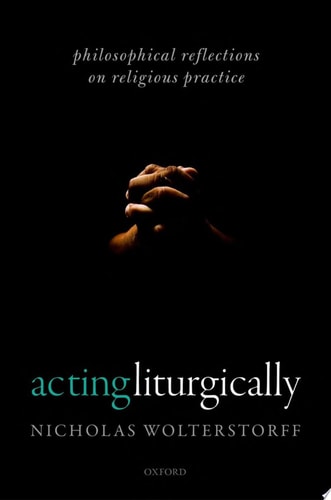
Acting Liturgically
0
0
As an Amazon Associate and affiliate partner, Menrva Books earns from qualifying purchases. Learn more
Author Description
Participation In Religious Liturgies And Rituals Is A Pervasive And Remarkably Complex Form Of Human Activity. This Book Opens With A Discussion Of The Nature Of Liturgical Activity And Then Explores Various Dimensions Of Such Activity. Over The Past Fifty Years There Has Been A Remarkable Surge Of Interest, Within The Analytic Tradition Of Philosophy, In Philosophy Of Religion. Most Of What Has Been Written By Participants In This Movement Deals With One Or Another Aspect Of Religious Belief. Yet For Most Adherents Of Most Religions, Participation In The Liturgies And Rituals Of Their Religion Is At Least As Important As What They Believe. One Of The Aims Of This Book Is To Call The Attention Of Philosophers Of Religion To The Importance Of Religious Practice And To Demonstrate How Rich A Topic This Is For Philosophical Reflection. Another Aim Is To Show Liturgical Scholars Who Are Not Philosophers That A Philosophical Approach To Liturgy Casts An Illuminating Light On The Topic That Supplements Their Own Approach. Insofar As Philosophers Have Written About Liturgy, They Have Focused Most Of Their Attention On Its Formative And Expressive Functions. This Book Focuses Instead On Understanding What Liturgical Agents Actually Do. It Is What They Do That Functions Formatively Or Expressively. What They Do Is Basic.
Menrva's Summary
THE THESIS
This book investigates the philosophical nature of liturgical activity, arguing that religious practice is as central to human experience as religious belief. Nicholas Wolterstorff, a prominent philosopher of religion, utilizes his background in analytic philosophy to shift the focus from the formative and expressive functions of ritual to the actual actions performed by liturgical agents. He posits that understanding the mechanics of what participants do is foundational to grasping the broader significance of religious life.
THE SCOPE MAP
What You Will Find
- Philosophical analysis of the nature of ritual and liturgical activity
- A framework for evaluating religious practice as a distinct human activity
- Arguments for the importance of practice over belief in religious studies
Scope Limits
- Does not provide a historical survey of specific liturgical traditions
- Does not focus on the theological or dogmatic content of specific religions
THE AUTHORITY PERSPECTIVE
Scholars and philosophers recognize this work as a significant contribution to the philosophy of religion by centering practice rather than belief. Readers frequently note the analytical rigor of the prose, which serves as a bridge between academic philosophy and liturgical studies.
Page Count:
272
Publication Date:
2018-01-01
Publisher:
Oxford University Press
ISBN-10:
0192527835
ISBN-13:
9780192527837
Religion
Philosophy
Theology
Philosophy of
Liturgy
Community Tags
Similar Books