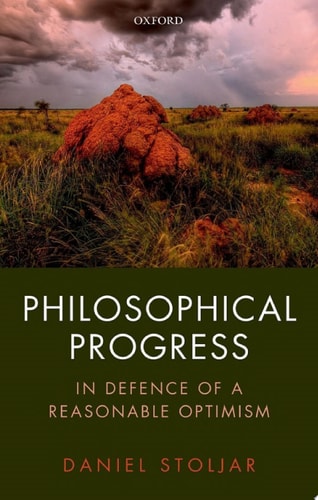
Philosophical Progress: In Defence of a Reasonable Optimism
0
0
As an Amazon Associate and affiliate partner, Menrva Books earns from qualifying purchases. Learn more
Author Description
Many people believe that philosophy makes no progress. Members of the general public often find it amazing that philosophers exist in universities at all, at least in research positions. Academics who are not philosophers often think of philosophy either as a scholarly or interpretative enterprise, or else as a sort of pre-scientific speculation. And - amazingly - many well-known philosophers argue that there is little genuine progress in philosophy. Daniel Stoljar argues that this is all a big mistake. When you think through exactly what philosophical problems are, and what it takes to solve them, the pattern of success and failure in philosophy is similar to that in other fields. In philosophy, as elsewhere, there is a series of overlapping topics that determine what the subject is about. In philosophy, as elsewhere, different people in different historical epochs and different cultures ask different big questions about these topics. And in philosophy, as elsewhere, big questions asked in the past have often been solved: Stoljar provides examples. Philosophical Progress presents a strikingly optimistic picture of philosophy - not a radical optimism that says that there is some key that unlocks all philosophical problems, and not the kind of pessimism that dominates both professional and non-professional thinking about philosophy, but a reasonable optimism that views philosophy as akin to other fields.
Menrva's Summary
THE THESIS
Does philosophy actually make progress, or is it merely a stagnant field of pre-scientific speculation? Daniel Stoljar, a professor of philosophy, challenges the prevailing skepticism regarding the field's advancement by arguing that philosophical progress is comparable to progress in the sciences. He posits that by re-evaluating the nature of philosophical problems and the criteria for their resolution, one can identify a clear pattern of success that mirrors other academic disciplines.
THE SCOPE MAP
What You Will Find
- A conceptual framework for defining philosophical problems and their solutions.
- Comparative analysis between philosophical inquiry and scientific methodology.
- Historical examples of philosophical questions that have reached resolution.
Scope Limits
- The text does not provide a universal key to solving all remaining philosophical dilemmas.
- It does not attempt to defend radical optimism or claim that all philosophical debates are nearing completion.
THE AUTHORITY PERSPECTIVE
Scholars and students of philosophy often note that this text provides a necessary counter-narrative to the common perception of philosophical stagnation. Experts highlight the work as a clear, structured defense of the discipline's intellectual value that remains accessible to those outside of professional philosophy.
Page Count:
200
Publication Date:
2017-01-01
Publisher:
OUP Oxford
ISBN-10:
0192522442
ISBN-13:
9780192522443
Non-Fiction
Philosophy
Epistemology
Academic
Metaphilosophy
Community Tags
Similar Books