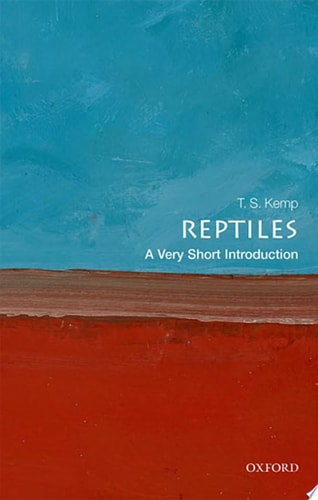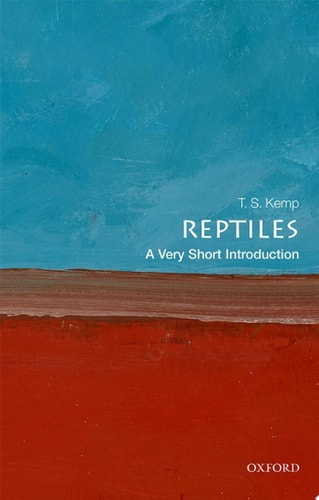
Reptiles: A Very Short Introduction
0
0
As an Amazon Associate and affiliate partner, Menrva Books earns from qualifying purchases. Learn more
Author Description
For millions of years reptiles have walked, crawled, and slithered over the face of our Earth. From the mighty dinosaurs who dominated the land, the pterosaurs who took to the air, and the marine adapted ichthyosaurs, to the living reptiles today such as the lizards, snakes, crocodiles, and turtles, plus the single species of tuatara in New Zealand, reptiles have come in all shapes and sizes. In this Very Short Introduction Tom Kemp discusses the adaptations reptiles made to first leave the sea and colonise the land in dry conditions, such as their waterproof skin, their ability to expel almost dry waste products, their efficient use of external heat for maintaining their body temperature, and the amniotic egg that is laid and develops on dry land. Considering the different living groups of reptiles today, Kemp then describes how their respective bodies are adapted for their different ways of life, from snake feeding patterns to the way crocodiles breathe. Finally, Kemp assesses the threat of extinction to reptile species due to over-exploitation, habitat destruction, and climate change, and considers what can be done. ABOUT THE SERIES: The Very Short Introductions series from Oxford University Press contains hundreds of titles in almost every subject area. These pocket-sized books are the perfect way to get ahead in a new subject quickly. Our expert authors combine facts, analysis, perspective, new ideas, and enthusiasm to make interesting and challenging topics highly readable.
Menrva's Summary
THE THESIS
This book investigates the evolutionary history, physiological adaptations, and current conservation status of reptiles within the context of their transition from marine to terrestrial environments. T. S. Kemp, an expert in vertebrate paleontology, utilizes a synthesis of biological data and evolutionary theory to explain how reptiles successfully colonized land. The text provides a framework for understanding the diverse morphological and behavioral strategies that have allowed these animals to persist across millions of years.
THE SCOPE MAP
What You Will Find
- Evolutionary history of reptiles including dinosaurs, pterosaurs, and ichthyosaurs
- Physiological mechanisms such as amniotic egg development and thermoregulation
- Analysis of modern reptile groups including lizards, snakes, crocodiles, and tuatara
- Assessment of contemporary threats including habitat loss and climate change
Scope Limits
- Does not provide an exhaustive species-by-species catalog
- Does not focus on pet care or husbandry practices
THE AUTHORITY PERSPECTIVE
Readers frequently note the academic density of the prose, which manages to condense complex evolutionary biology into a concise format. Experts highlight this as a foundational text for students and enthusiasts seeking a high-level overview of herpetology without excessive technical jargon.
Page Count:
160
Publication Date:
2019-01-01
Publisher:
OUP Oxford
ISBN-10:
0192529013
ISBN-13:
9780192529015
Science
Natural History
Zoology
Biology
Reference
Herpetology