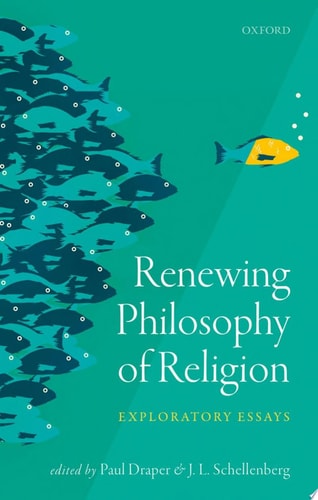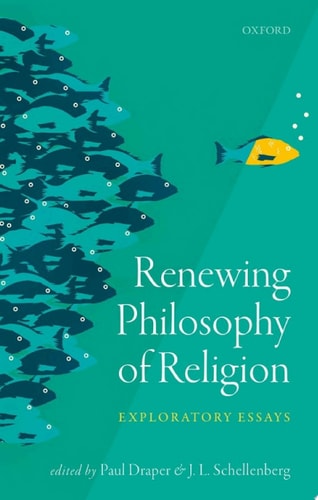
Renewing Philosophy of Religion: Exploratory Essays
Author Description
This book is animated by a shared conviction that philosophy of religion needs to change: thirteen new essays suggest why and how. The first part of the volume explores possible changes to the focus of the field. The second part focuses on the standpoint from which philosophers of religion should approach their field. In the first part are chapters on how an emphasis on faith distorts attempts to engage non-western religious ideas; on how philosophers from different traditions might collaborate on common interests; on why the common presupposition of ultimacy leads to error; on how new religious movements feed a naturalistic philosophy of religion; on why a focus on belief and a focus on practice are both mistaken; on why philosophy's deep axiological concern should set much of the field's agenda; and on how the field might contribute to religious evolution. The second part includes a qualitative analysis of the standpoint of fifty-one philosophers of religion, and also addresses issues about humility needed in continental philosophy of religion; about the implausibility of claiming that one's own worldview is uniquely rational; about the Moorean approach to religious epistemology; about a Spinozan middle way between 'insider' and 'outsider' perspectives; and about the unorthodox lessons we could learn from scriptures like the book of Job if we could get past the confessional turn in recent philosophy of religion.The goal of the volume is to identify new paths for philosophers of religion that are distinct from those travelled by theologians and other scholars of religion.
Menrva's Summary
THE THESIS
This volume investigates the necessity of reformulating the methodology and scope of contemporary philosophy of religion to distinguish it from theological inquiry. Editors J. L. Schellenberg and Paul Draper compile thirteen original essays that challenge existing disciplinary boundaries. The contributors argue that the field must move beyond traditional presuppositions regarding faith and ultimacy to embrace more diverse, naturalistic, and axiological perspectives.
THE SCOPE MAP
What You Will Find
- Qualitative analysis of the standpoints held by fifty-one professional philosophers of religion.
- Critiques of the 'confessional turn' and the emphasis on belief-based frameworks.
- Explorations of non-Western religious ideas and new religious movements.
- Methodological proposals for integrating axiological concerns into religious discourse.
Scope Limits
- The text does not provide a comprehensive history of religious thought.
- It does not attempt to reconcile philosophy with specific dogmatic theological systems.
THE AUTHORITY PERSPECTIVE
Experts identify this collection as a significant intervention for scholars seeking to redefine the boundaries of the field. Readers frequently note the academic density of the prose and its utility for those interested in the meta-philosophical future of religious studies.
Page Count:
272
Publication Date:
2018-01-01
Publisher:
OUP Oxford
ISBN-10:
0192526588
ISBN-13:
9780192526588
Religion
Philosophy
Religion
Philosophy of
Epistemology
Community Tags
Similar Books