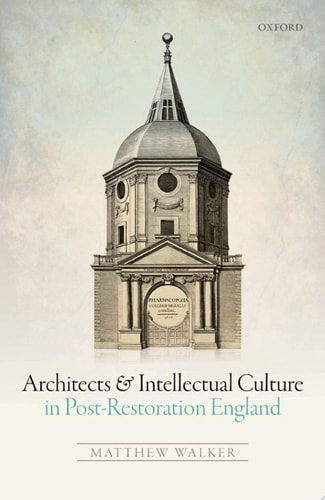
Architects and Intellectual Culture in Post-Restoration England
0
0
As an Amazon Associate and affiliate partner, Menrva Books earns from qualifying purchases. Learn more
Author Description
Architects, Builders, and Intellectual Culture in Restoration England charts the moment when well-educated, well-resourced, English intellectuals first became interested in classical architecture in substantial numbers. This occurred after the Restoration of the Monarchy in 1660 and involved people such as John Evelyn, Robert Hooke, Sir Christopher Wren, and Roger North. Matthew Walker explores how these figures treated architecture as a subject of intellectual enquiry, either as writers, as designers of buildings, or as both. In four substantial chapters it looks at how the architect was defined as a major intellectual figure, how architects acquired material that allowed them to define themselves as intellectually competent architects, how intellectual writers in the period handled knowledge of ancient architecture in their writing, and how the design process in architecture was conceived of in theoretical writing at the time. In all, Walker shows that the key to understanding English architectural culture at the time is to understand how architecture was handled as knowledge, and how architects were conceived of as collectors and producers of such knowledge. He also makes the claim that architecture was treated as an extremely serious and important area of intellectual enquiry, the result of which was that by the turn of the eighteenth century, architects and architectural writers could count themselves amongst England's intellectual and cultural elite.
Menrva's Summary
THE THESIS
This book investigates how architecture transitioned into a primary field of intellectual enquiry among the English elite following the Restoration of the Monarchy in 1660. Matthew Walker, an expert in architectural history, examines the intersection of design and scholarship through the lives and works of figures such as John Evelyn, Robert Hooke, and Sir Christopher Wren. By analyzing theoretical writings and design processes, the author argues that architecture became a defining marker of intellectual competence and cultural status by the early eighteenth century.
THE SCOPE MAP
What You Will Find
- Analysis of the intellectual status of the architect in post-1660 England
- Examination of how classical architectural knowledge was collected and disseminated
- Theoretical frameworks regarding the design process in the late seventeenth century
- Case studies of prominent figures including John Evelyn and Sir Christopher Wren
Scope Limits
- The text focuses specifically on the intellectual and theoretical aspects of architecture rather than a comprehensive survey of all physical building projects of the era
- It does not cover the vernacular or non-elite architectural practices of the period
THE AUTHORITY PERSPECTIVE
Scholars recognize this work as a significant contribution to the study of seventeenth-century intellectual history and the professionalization of the architect. Readers frequently note the academic density of the prose, which provides a rigorous examination of how architecture functioned as a form of knowledge production.
Page Count:
241
Publication Date:
2017-01-01
Publisher:
OUP Oxford
ISBN-10:
019252853X
ISBN-13:
9780192528537
Architecture
History
Intellectual History
European History
Restoration England
British History
Great Britain
Community Tags
Similar Books