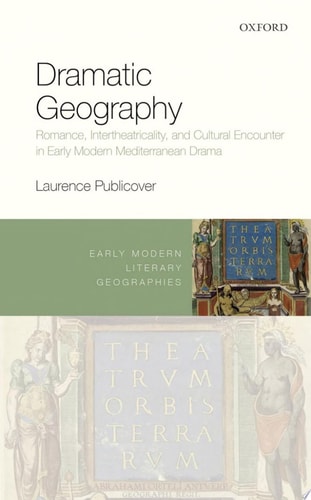
Dramatic Geography
0
0
As an Amazon Associate and affiliate partner, Menrva Books earns from qualifying purchases. Learn more
Author Description
Focusing On Early Modern Plays Which Stage Encounters Between Peoples Of Different Cultures, This Book Asks How A Sense Of Geographical Location Was Created In Early Modern Theatres That Featured Minimal Scenery. While Previous Studies Have Stressed These Plays' Connections To A Historical Mediterranean In Which England Was Increasingly Involved, This Volume Demonstrates How Their Dramatic Geography Was Shaped Through A Literary And Theatrical Heritage. Reading Canonical Plays Including The Merchant Of Venice, The Jew Of Malta, And The Tempest Alongside Lesser-known Dramas Such As Soliman And Perseda, Guy Of Warwick, And The Travels Of The Three English Brothers, Dramatic Geography Illustrates How Early Modern Dramatists Staging Foreign Worlds Drew Upon A Romance Tradition Dating Back To The Medieval Period, And How They Responded To One Another's Plays To Create An 'intertheatrical Geography'. These Strategies Shape The Plays' Wider Meanings In Important Ways, And Could Only Have Operated Within The Theatrical Environment Peculiar To Early Modern London: One In Which Playwrights Worked In Close Proximity, In One Instance Perhaps Even Living Together While Composing Mediterranean Dramas, And One Where They Could Expect Audiences To Respond To Subtle Generic And Intertextual Negotiations. In Reassessing This Group Of Plays, Laurence Publicover Brings Into Conversation Scholarship On Theatre History, Cultural Encounter, And Literary Geography; The Book Also Contributes To Current Debates In Early Modern Studies Regarding The Nature Of Dramatic Authorship, The Relationship Between Genre And History, And The Continuities That Run Between The Fourteenth And Seventeenth Centuries.
Menrva's Summary
THE THESIS
This book investigates how early modern playwrights constructed a sense of geographical location on stage despite the constraints of minimal scenery. Laurence Publicover, a scholar of early modern literature, argues that this dramatic geography was not merely a reflection of historical Mediterranean encounters but was instead deeply rooted in a literary and theatrical heritage. By analyzing the concept of 'intertheatrical geography,' the author demonstrates how playwrights relied on medieval romance traditions and intertextual responses to one another's works to define foreign spaces for London audiences.
THE SCOPE MAP
What You Will Find
- Analysis of canonical works including The Merchant of Venice, The Jew of Malta, and The Tempest.
- Examination of lesser-known dramas such as Soliman and Perseda and The Travels of the Three English Brothers.
- A framework for understanding 'intertheatrical geography' within the specific social and professional environment of early modern London.
Scope Limits
- The study focuses primarily on the theatrical and literary construction of space rather than the geopolitical realities of the period.
- It does not provide an exhaustive history of all early modern plays featuring foreign settings.
THE AUTHORITY PERSPECTIVE
Scholars in the field of early modern studies recognize this work as a significant contribution to the understanding of how theatrical space and literary tradition intersect. Experts frequently highlight the author's ability to bridge the gap between theatre history and cultural geography through rigorous textual analysis.
Page Count:
224
Publication Date:
2017-01-01
Publisher:
Oxford University Press
ISBN-10:
0192529730
ISBN-13:
9780192529732
Geography and Literature
Literary Criticism
Early Modern
Theatre History
Community Tags
Similar Books