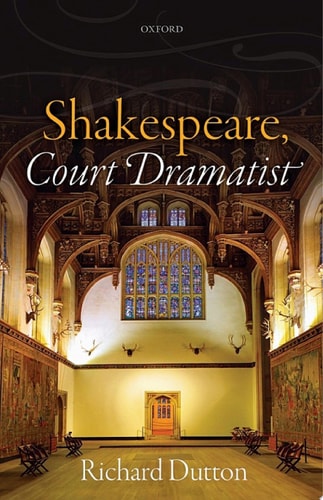
Shakespeare, Court Dramatist
0
0
As an Amazon Associate and affiliate partner, Menrva Books earns from qualifying purchases. Learn more
Author Description
Shakespeare, Court Dramatist centres around the contention that the courts of both Elizabeth I and James I loomed much larger in Shakespeare's creative life than is usually appreciated. Richard Dutton argues that many, perhaps most, of Shakespeare's plays have survived in versions adapted for court presentation, where length was no object (and indeed encouraged) and rhetorical virtuosity was appreciated. The first half of the study examines the court's patronage of the theatre during Shakespeare's lifetime and the crucial role of its Masters of the Revels, who supervised all performances there (as well as censoring plays for public performance). Dutton examines the emergence of the Lord Chamberlain's Men and the King's Men, to whom Shakespeare was attached as their 'ordinary poet', and reviews what is known about the revision of plays in the early modern period. The second half of the study focuses in detail on six of Shakespeare's plays which exist in shorter, less polished texts as well as longer, more familiar ones: Henry VI Part II and III, Romeo and Juliet, Henry V, Hamlet, and The Merry Wives of Windsor. Dutton argues that they are not cut down from those familiar versions, but poorly reported originals which Shakespeare revised for court performance into what we know best today. More localized revisions in such plays as Titus Andronicus, Richard II, and Henry IV Part II can also best be explained in this context. The court, Richard Dutton argues, is what made Shakespeare Shakespeare.
Menrva's Summary
THE THESIS
This study investigates the extent to which the royal courts of Elizabeth I and James I influenced the creative development and textual evolution of William Shakespeare's plays. Richard Dutton, a scholar of early modern drama, utilizes historical records of court patronage and the administrative functions of the Masters of the Revels to support his argument. He posits that many of Shakespeare's most famous works were specifically revised or expanded for court presentation, challenging the traditional view that shorter texts were merely abridged versions of longer originals.
THE SCOPE MAP
What You Will Find
- Historical analysis of the Lord Chamberlain's Men and the King's Men acting companies.
- Examination of the role of the Masters of the Revels in theatrical censorship and production.
- Comparative textual analysis of six specific plays: Henry VI Part II and III, Romeo and Juliet, Henry V, Hamlet, and The Merry Wives of Windsor.
- Discussion of localized revisions in Titus Andronicus, Richard II, and Henry IV Part II.
Scope Limits
- The study does not provide a comprehensive biography of Shakespeare outside of his professional relationship with the court.
- It does not offer a complete textual history of the entire Shakespearean canon.
THE AUTHORITY PERSPECTIVE
Scholars frequently cite this work as a significant contribution to the understanding of early modern theatrical production and the influence of patronage on dramatic form. Readers often note the academic density of the prose, which assumes a foundational knowledge of Shakespearean textual history and Elizabethan court politics.
Page Count:
333
Publication Date:
2016-01-01
Publisher:
OUP Oxford
ISBN-10:
0191083321
ISBN-13:
9780191083327
History
Theatre History
Early Modern
Great Britain
English & College Success
Literary Criticism
English
Community Tags
Other Editions(4)
Similar Books
Reader Comments
Share Your Thoughts
No comments yet. Be the first to share your thoughts!